


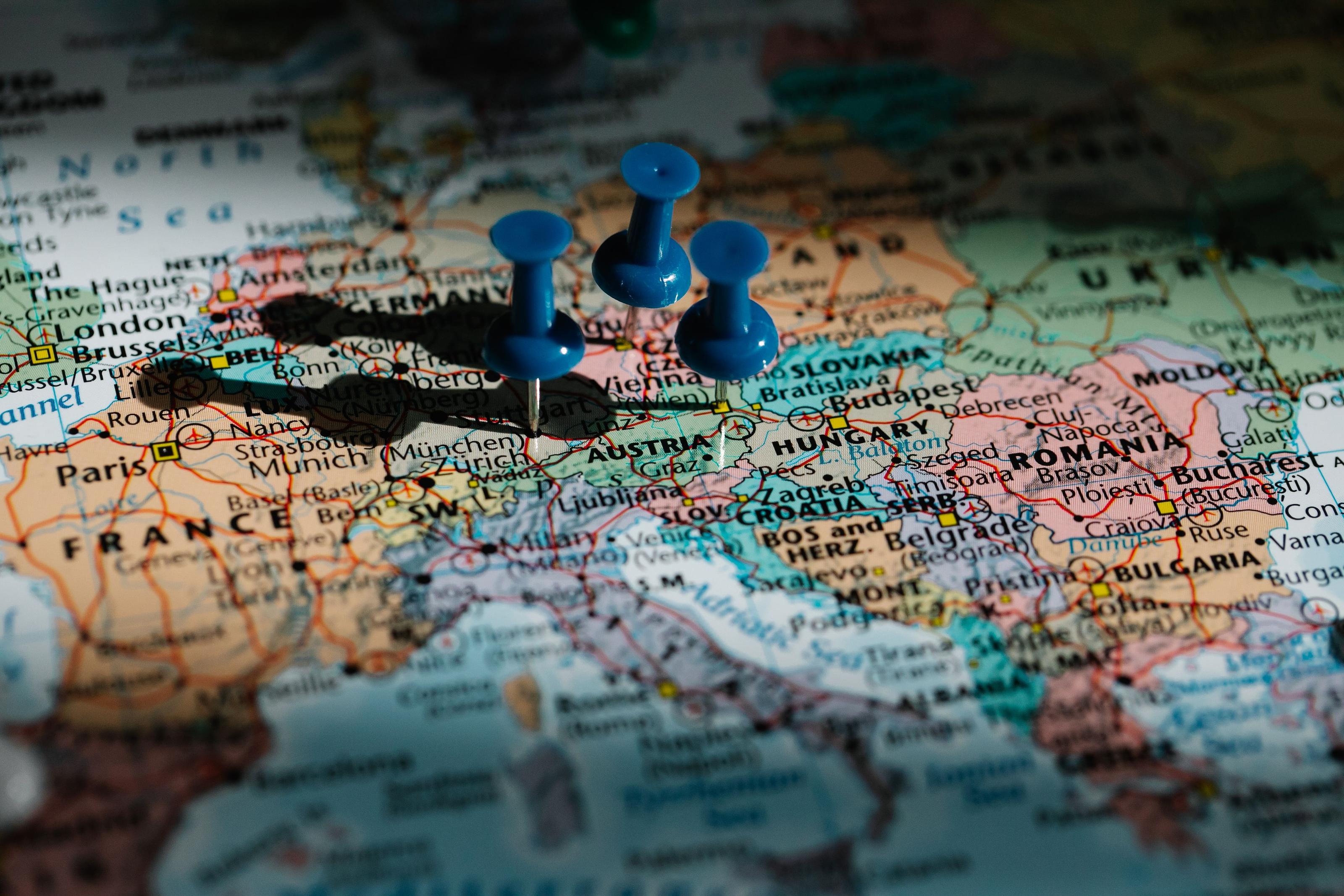
Somewhere in a county recorder’s office there is a drawer full of deeds for people who bought the wrong seven acres. Not unbuildable, not fraudulent — just wrong for the life they actually wanted. They found the cheapest parcel with decent sun, signed within the week because a cash buyer from three states over was “also very interested,” and moved a solar array, a well rig, and a U-Haul’s worth of savings onto land that turned out to sit under a flight path, in a county where the aquifer was already spoken for by a ranch upstream, forty minutes from the fiber drop the listing had called “nearby.” The land wasn’t bad. It just answered a different question than the one they were actually asking.
That’s the failure mode this page exists to prevent. “Where should I go off-grid” feels like one question. It isn’t — it’s seven, and most of them pull against each other. The questionnaire below doesn’t hand you a listicle of “top states for off-grid living.” It scores your actual priorities against real regional data, on both sides of the Atlantic, and then splits your answer into the two different problems it actually contains — each pointed at the resource built to solve it.
The Seven Variables, and Why No Region Wins All of Them
Every off-grid relocation decision runs on the same seven inputs, whether the person making it has ever written them down or not:
- Dark sky — how much of the night has already been taken by light pollution, measured on the 1-to-9 Bortle scale.
- Low RF — distance from the ambient radio-frequency noise floor of cell towers, neighbors’ WiFi, and broadcast transmitters.
- Clean air — the particulate load you breathe on an average day, not just the day you toured the property.
- Water — whether the water on or under the land is legally yours to use, not merely present.
- Winter sun — the solar resource on the shortest, cloudiest week of the year, because that’s the week your system actually has to survive.
- Budget — total cash for land plus a build, and what that number buys moves by 10x from county to county.
- Climate — how many of the year’s 365 days you spend fighting the weather instead of living in it.
Rank any single-criteria listicle by one of these and a different region wins every time. Rank by dark sky alone and remote West Texas or the Nevada outback top the chart. Rank by winter sun alone and the desert Southwest wins by a landslide — Arizona averages north of 6.5 peak sun hours a day, while a genuinely rural stretch of Vermont’s Northeast Kingdom runs closer to 3.8 in the depths of winter, which is the difference between a battery bank that shrugs off a cloudy week and one that doesn’t. Rank by land cost and remote New Mexico or Utah desert parcels beat almost everything at roughly $1,000–$5,000 an acre, while a scenic pocket of New England for the same acreage can run $4,000–$8,000 and climbing. None of those rankings agree with each other, and nobody selling land hands you all seven at once.
Water is the variable that ambushes the most buyers, because it’s invisible in a listing photo. Across most of the western US, water rights follow prior appropriation — first in time, first in right — so a creek crossing your land can be entirely spoken for by a ranch upstream that filed its claim in 1936, leaving you none of it. East of roughly the 100th meridian, riparian rights are closer to the European default: if it borders or crosses your land you generally have a reasonable-use claim, though a well permit still routes through a state or national agency either way. Screening water access before you fall for a parcel is the single highest-leverage thing this whole exercise does.
How the Score Actually Works
Score every candidate region 1–5 on each of the seven factors, weight each factor 1–5 by how much you personally care, multiply, and sum. It’s the same arithmetic an underwriter runs on a credit file, pointed at a life decision instead of a loan. Here’s what it looks like against three real candidate regions for a persona who weights dark sky and land cost heaviest, water and clean air close behind, and puts winter sun and climate last:
| Factor | Weight | West Texas high desert | Vermont Northeast Kingdom | Rural Alentejo, Portugal |
|---|---|---|---|---|
| Dark sky | 5 | 5 | 3 | 4 |
| Clean air | 4 | 4 | 5 | 4 |
| Winter sun | 2 | 5 | 1 | 4 |
| Water access | 4 | 2 | 5 | 3 |
| Land cost | 5 | 4 | 3 | 5 |
| Low RF | 3 | 4 | 3 | 4 |
| Climate mildness | 2 | 3 | 2 | 5 |
| Weighted total | — | 97 | 85 | 103 |
Key number
103 / 125
Rural Portugal’s interior edges out the “obvious” West Texas pick for this persona — not because it’s objectively better, but because dark sky and land cost are the two heaviest-weighted factors here, and Portugal takes land cost by enough of a margin — plus extra ground on water access and climate — to outweigh the dark-sky lead West Texas actually holds. Change the weights and the winner changes. That’s the entire point: there is no single best off-grid region, only the region that wins your weights. This hand-scored example is illustrative — the questionnaire below runs the same method against a much longer shortlist, matched to whichever answers you actually give it.
The Reference Points Behind the Numbers
The inputs behind that scoring model aren’t vibes. A handful of real scales do almost all the work. The Bortle scale runs 1 (a truly black sky, Milky Way casting shadows) to 9 (inner-city glow that erases everything but the moon and a few planets) — most suburban sky reads Bortle 6–7. PM2.5, fine particulate measured in micrograms per cubic meter, is the clean-air number that matters most for lungs: the WHO guideline is 5 µg/m³ annual average, the current US EPA standard is 9. Peak sun hours at the worst month of the year, not the annual average, is what actually sizes a winter-safe battery bank. And for radio quiet, the extreme real-world case is Green Bank, West Virginia — a roughly 13,000-square-mile National Radio Quiet Zone in force since 1958, inside which transmitters are restricted and some homes legally can’t run a WiFi router. Most low-RF land doesn’t need to go anywhere near that far; it just needs distance from dense buildout.
| Region | Bortle | December, tilted array (h/day) | PM2.5 (annual, µg/m³) | Rural land, ballpark |
|---|---|---|---|---|
| West Texas / Big Bend country (US) | 1–2 | ~4.5–5.3 | ~4–6 | $1.5k–4k/acre |
| NM / AZ high desert (US) | 2–3 | ~4.5–5.5 | ~4–7 | $1k–5k/acre |
| Vermont Northeast Kingdom (US) | 3–4 | ~1.5–2.5 | ~4–5 | $4k–8k/acre |
| Rural Alentejo (Portugal) | 3–4 | ~3 | ~6–9 | ~€7k–11k/ha |
| Interior Castilla (Spain) | 3 | ~3.8–4.2 | ~6–8 | ~€2k–6k/ha |
| Alpine valley (AT / SI) | 3–4 | ~2.5–3 | ~5–8 | ~€8k–20k/ha |
Figures are editorial ballparks for orientation, not appraisals — verify current listings, tax, mineral, and water-rights status for any specific parcel before you rely on them.
The caveat
Those PM2.5 numbers are annual averages, and averages hide the month that actually breaks the plan. A high-desert county reading 5 µg/m³ most of the year can spike past 100 for two smoke-choked weeks in wildfire season — 2020–2025 made that a near-annual event across the Mountain West and, increasingly, southern Europe in late summer. If clean air is your top-weighted factor, check a real-time monitor during the worst recent fire season for a county, not just its yearly average on a ranking page.
Where the Two Halves of Your Answer Actually Go
Submit the questionnaire below and your answer splits in two, because it’s really two problems wearing one form.
The “where” half — which actual parcels, in which actual county or municipality, clear the dark-sky, water-rights, and zoning bar you just set — is a land-search and site-vetting problem. We hand that half to cleanz.one, the sister property built specifically to screen land against exactly these criteria (air, RF, light pollution) before you own it, not after.
The “how” half — once a region or a specific parcel is on the table, what it actually takes to power, water, and heat it without a utility line — is what Grid CEO exists for. Today that means a sized equipment shortlist and the guides to act on it; as our vetted installer network opens region by region, it becomes a warm introduction to installers for solar, battery, backup generator, or well-and-water systems — and your submission holds your place in that queue from day one. If you want the sizing math behind that half before you talk to anyone, the 7-step system design guide walks it end to end.
When installer introductions go live, they never cross regions: US submissions will reach US-licensed installers only, European submissions European-based ones only — vetted country by country. Until vetting covers your area, your answers simply hold your spot in that exact queue, and you hear from us the moment it opens.
Is this the same as your off-grid solar sizing calculator?
No — different job entirely. The sizing calculator assumes you already have a site and works out the array, battery, and inverter it needs. This tool runs before that: it helps you choose the site in the first place, using criteria a sizing calculator never asks about (dark sky, RF, water rights, land cost).
Do you sell my answers to a pile of random land brokers?
No. Land-search intent goes to one partner, cleanz.one, and power/water intent stays with Grid CEO — queued for the vetted installers we’re standing up region by region, capped at three per project when routing opens, never blasted to a purchased list. That exclusivity is the entire difference between this and a lead form you’d regret filling out.
What if I don’t know my budget yet?
Leave it on “not sure yet.” Your priority weights and region answer alone narrow the shortlist meaningfully; budget just sharpens it further once you have a number.
I already own land — is this still useful?
Yes, run it in reverse. Score the land you already have against the same seven factors to sanity-check what you bought, and if something like water rights turns out wrong, that finding routes straight into the “how” side — site is already picked, so it queues you for an installer or well-driller introduction instead of a land search.