


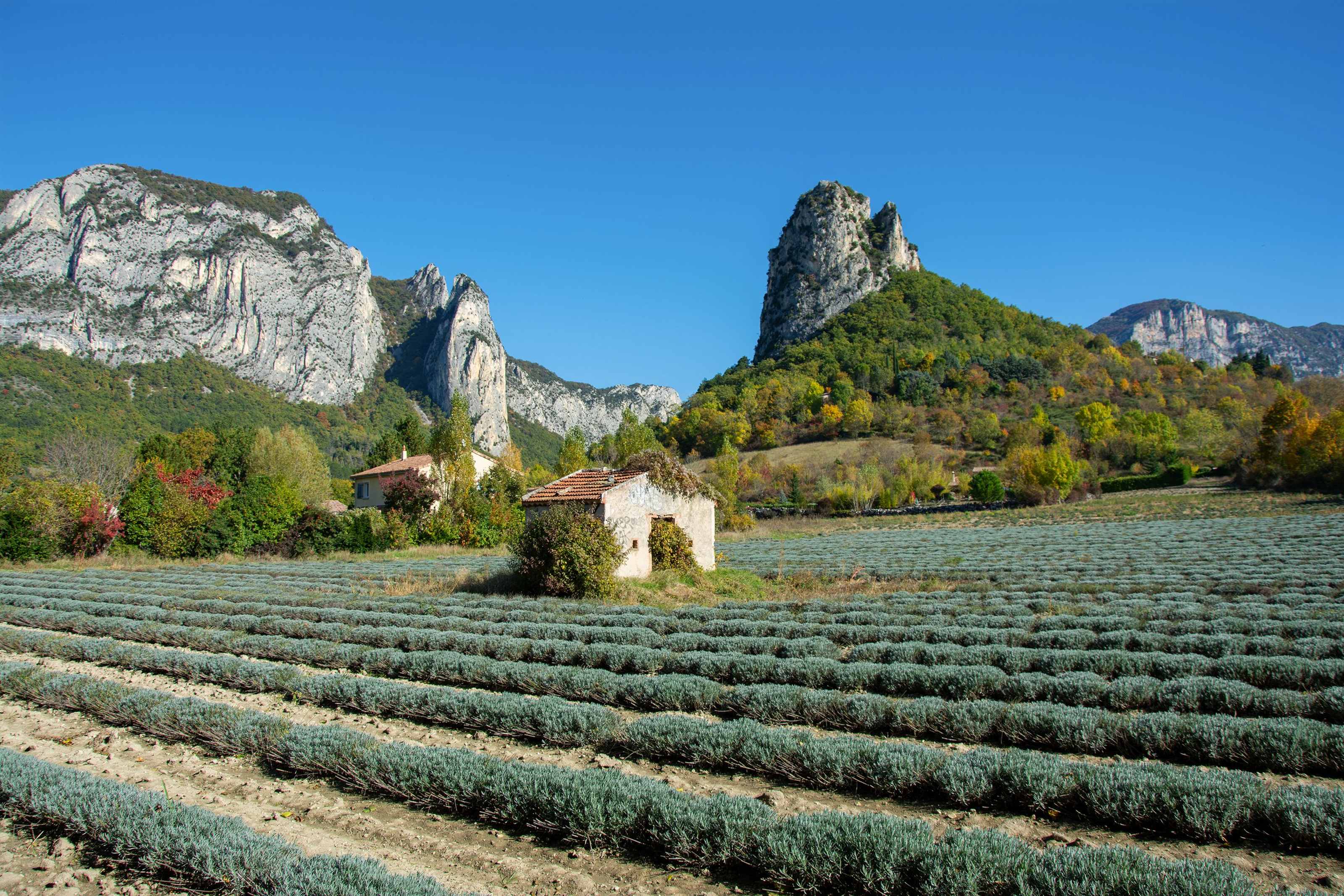
A couple in the Cévennes spent three summers turning a stone sheep-shed into a home — rammed-earth floor, a wood stove, a 6kW array wired into what used to be the hay loft. The panels went up without a single form crossing a desk; nobody in Paris regulates whether your roof talks to a battery instead of Enedis. The trouble started with the shed itself: land zoned agricole, a mairie with aerial photographs going back a decade, and in 2026 that decade no longer buys you anything.
That’s the trap almost every off-grid dream in France and Germany falls into, and it has nothing to do with solar. Going electrically off-grid — panels, battery, no utility meter — is close to unregulated in both countries; nobody checks whether your inverter has ever heard of Enedis or your local Netzbetreiber. Going legally off-grid — putting a habitable dwelling on the cheap rural land that makes the dream affordable — is a separate fight, governed by zoning law written decades before rooftop solar existed. Confuse the two and you can spend eighteen months sizing a battery bank for a house you were never allowed to build.
France: The Land Question Is a Numbers Game — and the Numbers Just Got Stricter
Every French commune runs on a Plan Local d’Urbanisme (PLU) that sorts land into four letters: U (already urbanized, buildable), AU (earmarked for future development), A (agricultural) and N (natural or protected). Off-grid buyers gravitate toward A and N land because it’s the cheapest and least built-up — exactly the zoning written to permit almost nothing beyond farm buildings and forestry. A gorgeous, empty, dirt-cheap parcel is usually empty for a reason.
The permit thresholds don’t relax because you’re not on the grid. Under the Code de l’urbanisme, a structure under 5m² needs no formality at all; 5–20m² requires a déclaration préalable, a lighter filing still reviewed against the PLU; anything over 20m² needs a full permis de construire (PC) — the same permit a grid-tied house needs, checked against the same zoning. On A or N land, a PC for a new dwelling is refused by default; the code carves narrow exceptions for genuine farming need, and little else.
Build there anyway without asking, and French law has an official name for it: cabanisation — unauthorized dwellings and structures in non-buildable zones, which lawmakers describe as a fléau national, a national scourge. In Hérault alone, the département lawmakers cited while drafting tighter rules, nearly 30,000 parcels have been identified as illegally cabanized, with roughly 250 new unauthorized structures added every year. That’s not a fringe problem hiding in one valley — it’s the reason the law changed twice in eight months.
Key number
30,000
Parcels identified as illegally “cabanized” in the Hérault département alone — the case study lawmakers cited while passing the Loi Huwart (26 November 2025) and a Senate bill (adopted 6 May 2026) that both tighten enforcement further. If your dream plot is cheap, rural and zoned A or N, you’re looking at the same zoning that produced that number, not a loophole nobody else found.
Those two 2025–2026 texts change three things for a self-built cabin on agricultural land. Demolition gets faster: a new prefectoral procedure lets the préfet order a teardown on the mayor’s referral, skipping the judicial authorization the old process required. Hookups get harder: connecting an unauthorized building to power or water is now blocked when the land use doesn’t conform — a lever that can’t reach a true off-grid system, since there’s no connection to request. And the old folk wisdom is on notice: the Senate voted to strip the ten-year prescription that let a structure become unchallengeable by simply surviving unnoticed — though that vote was only a first reading, and the bill is still before the Assemblée nationale, not yet law. “Build it quietly and wait it out” was never great advice; if this bill clears the Assemblée as passed, it won’t even be technically true.
None of that makes solar the problem — an off-grid system draws no more scrutiny than a grid-tied one, arguably less, with no meter record inviting a visit. It means the building underneath has to already be legal. In practice that’s three routes: land already zoned U or AU with a normal PC (RE2020, France’s 2022 energy code, credits on-site renewable generation toward its target, so off-grid helps clear it, not just power it); an existing, legally-permitted dwelling on A or N land, retrofitted — renovating a legal structure is a different application than creating one; or genuine farm housing, the one use A/N zoning still privileges. Either way, insurers will expect NF C 15-100 / Consuel-grade sign-off on the wiring even without a grid connection, and sanitation still needs SPANC approval, off-grid or not.
Germany: §35 BauGB Draws a Line Around the Whole Countryside
Germany’s version of the same wall has a section number people actually cite in conversation: §35 BauGB, “Bauen im Außenbereich” — building in the outlying area. Anything outside a municipality’s formal Bebauungsplan (a development plan) and outside the built-up core of an existing settlement falls into the Außenbereich, and the default position of German planning law is that it stays that way.
§35 doesn’t ban everything out there — it privileges a closed list: agriculture and forestry, certain public infrastructure, a handful of others. Ordinary housing isn’t on it. German planning lawyers put it plainly: reine Wunschwohnhäuser sind nicht privilegiert — a house built purely because you’d like to live there is not a privileged use, no matter how self-sufficient its electricity is. Apply for a Baugenehmigung to build off-grid in open countryside for the land and the quiet, and the application gets reviewed against a list your project was never on.
What survives is narrower, and familiar from France:
- Bestandsschutz. A structure lawfully built in the Außenbereich keeps constitutional protection under Article 14 of the Basic Law, even though the same building couldn’t get approved fresh today. Most real off-grid homes in rural Germany are renovations, not green-field builds. Buy the standing walls, not the empty meadow.
- Wochenendhaus zones. Some municipalities designate small B-Plan areas for weekend houses, bordering allotment-garden law. You can build small and add solar and a battery, but almost all carry an explicit Dauerwohnen verboten condition: furnish it, power it, spend weekends there, but registering it as your Hauptwohnsitz is usually against the zoning, and enforcement on people quietly living there year-round has been tightening.
- Nutzungsänderung of an existing farm building. Converting a barn or Stadel already on the property into residential use is possible under narrower exceptions, especially where it’s worth preserving — but it’s a case made to the Bauamt, not a DIY reinterpretation.
One reframe worth having before the next headline about renewable energy in the Außenbereich: certain energy infrastructure does get its own privileged category under §35 — it started with wind turbines, later extended to some ground-mounted solar. That privilege is written for grid-scale generation feeding the public network, not a private homeowner who wants to live off it. A privileged solar farm doesn’t mean your residential dream gets the same lane.
Bavaria Adds a Layer
Bavaria runs its own state building code, the BayBO, on top of the federal BauGB — and much of its scenic countryside also carries a Landschaftsschutzgebiet designation, a landscape-conservation layer stacking a second permission on top of §35’s first. Even the narrow paths above inherit it: a Bestandsschutz renovation or farm-building conversion inside a Bavarian Landschaftsschutzgebiet can need separate sign-off from the Naturschutzbehörde before the Bauamt moves. Alpine Almhütten on the high pastures are narrower still — permitted for seasonal grazing, not year-round living — and authorities watch for a herding hut that’s quietly acquired a permanent resident and a satellite dish.
| Dimension | France | Germany |
|---|---|---|
| Default zoning stance | A/N zones bar new dwellings by default | Außenbereich (§35) bars new dwellings by default |
| New off-grid house on raw rural land | Needs U/AU zoning + permis de construire; A/N refused barring farm-use exceptions | Needs a privileged use under §35; ordinary housing isn’t one |
| Realistic route | Existing legal dwelling, or genuine farm-tied housing | Bestandsschutz renovation of an existing Hof, or a narrow Nutzungsänderung |
| 2025–26 enforcement trend | Loi Huwart + Senate bill: faster prefectoral demolition, 10-year amnesty scrap still before the Assemblée nationale | Bavaria stacks BayBO + Landschaftsschutzgebiet on top of federal law |
| The power system itself | Unregulated if never grid-tied; insurers expect Consuel-grade sign-off | Unregulated if never grid-tied; insurers expect DIN VDE-grade sign-off |
What the VAT, tax and grant side of this is actually worth in 2026 — Germany’s 0% VAT threshold included — is broken out country-by-country in the European permits & incentives guide; this page is deliberately the land-and-zoning half, not a repeat of that maths.
The Wiring Underneath Isn’t What a US Kit Assumes
Solve the land question and you’re left with an easier one: France and Germany both run 230V single-phase and 400V three-phase at 50Hz, nothing like the 120/240V split-phase, 60Hz-tuned kit sold for an American cabin. That’s not a transformer-and-adapter fix — it’s the wrong part list from the inverter’s firmware up. The full sizing breakdown lives here; what matters here is what’s already in the walls.
Old rural properties on both sides of the border were often wired three-phase from the start — triphasé in France, Drehstrom in Germany — anywhere that ran a borehole pump, a grain mill, or a workshop lathe. Drop a single-phase-only inverter into a panel like that and two of the three phases simply go dead: the pump on phase two doesn’t care how full the battery is. Getting this right means auditing which phase every circuit sits on before you spec hardware, then choosing a genuine three-phase hybrid inverter — or a matched trio of single-phase units synced across phases — instead of one box and an extension cord.
Once you know which phases you’re actually feeding, the hardware choice itself is short. Here’s 230V-native, three-phase-aware gear built for exactly this job, not a US unit with a plug adapter taped to the box:
What a France or Germany Installer Needs From You First
Every mairie, Bauamt and installer quote starts with the same handful of facts. Have these ready and you’ll skip most of the back-and-forth:
- Country and the specific commune or Gemeinde — every zoning rule above is set locally, never nationally, and the PLU or B-Plan for your parcel is the only document that actually answers “can I build here.”
- Whether the plot already carries a legal dwelling, or is raw land — this alone decides which of the routes above applies to you.
- Your rough target in kW (array) and kWh (battery), and whether the property is single- or three-phase wired — the numbers an RE2020 credit or a German sign-off both key off.
- Whether you intend to register the address as your primary residence — the one fact that rules out Wochenendhaus zoning and most weekend-house paths in Germany.
Can I legally live off-grid in France?
The electricity, yes — an isolated solar-plus-battery system with no grid connection is close to unregulated; Consuel attestation is formally tied to a grid-connection request, though insurers will still expect NF C 15-100 / Consuel-grade sign-off on the wiring. The housing is the real question: land classified U or AU under your commune’s PLU can get a normal permis de construire; land classified A or N almost always can’t, unless you’re renovating an existing legal dwelling or building housing genuinely tied to farming.
Is it illegal to go off-grid in Germany?
No — but “off-grid” and “outside the Bebauungsplan” are different questions. Running a home on solar and battery with no utility connection isn’t restricted by §35 BauGB; what §35 restricts is a new residential building in the Außenbereich at all, since ordinary housing isn’t a privileged use there. Most people who genuinely live off-grid in rural Germany are renovating an existing, Bestandsschutz-protected structure, not building fresh.
What is “cabanisation” and could it affect land I’m considering?
It’s the French legal term for unauthorized dwellings in non-buildable zones — agricultural, natural, forested or protected land. It’s widespread enough that lawmakers call it a national scourge, and two 2025–2026 texts — the enacted Loi Huwart and a Senate bill still before the Assemblée nationale — move to make enforcement faster and strip the old ten-year amnesty. If a rural parcel is priced cheap specifically because “nobody checks out there,” treat that as a warning, not a selling point.
Can I put solar panels on a Wochenendhaus or holiday chalet in Germany?
Usually yes for the panels and battery; the restriction is on how you live there, not the power system. Most Wochenendhaus and allotment-garden zoning explicitly prohibits Dauerwohnen — registering it as your permanent residence — even though the structure is legal and can be fully powered. Confirm the specific B-Plan conditions before assuming a “green weekend house” can quietly become your only address.