


US edition · prices & math dated July 2026
Backup → hybrid → true off-grid
Be the house with the lights on.
1.28 million homes went dark over the July 4th weekend — in a heat wave, next to generators that wouldn’t start. Rates keep climbing with no ceiling, the 30% credit is gone, and every quote still smells like a sales funnel. There is another way through: size a battery-first backup or a full off-grid build to your actual loads, every figure shown with its method — then hand the finished spec to vetted installers who quote against it. Or build to it yourself, if you own a torque screwdriver.
Get a quote Become the Grid Run your numbers
Free: your loads become a written spec, and vetted pros quote against it — not against a blank check. 50 field guides · six calculators · no email gate before the value.
1.28M
customers dark over the July 4th heat wave, while PJM brushed its all-time demand record.
Method
utility outage trackers, July 2–5, 2026 — Michigan, Pennsylvania and New Jersey worst hit.
10.1%
the implied winter reserve — ERCOT’s firm output vs peak demand heading into January 2026, down from 17.5% before Uri — quoted in Texas threads like a countdown.
Method
computed from ERCOT Monthly Outlook for Resource Adequacy firm-capacity and peak-demand data (Jan 2026 ed.). ERCOT’s own summer planning margin reads more comfortable — the winter math is the one Texans argue about.
+$0.15/W
roughly what installed-solar quotes rose after the credit died — while panel hardware got 15–20% cheaper.
Method
2026 quote reports vs distributor price lists. The gap is the finding.
field guides in the library, across power, water, heat, land and the county — each showing its math, not just its verdict.
Method
count them. Then re-run any number you doubt — we want you to.
What this summer actually feels like
The Fourth of July didn’t sound like fireworks in Michigan, Pennsylvania and New Jersey — it sounded like 1.28 million air conditioners spinning down at once. The grid was, in its operator’s own words, “stretched to the limit,” a phrase now quoted back with heavy sarcasm. And the generators bought after the last storm did what generators do: refused to start on the first pull, then overheated in the same heat that broke the wires. If your street went dark that weekend, you are exactly who this page was built for — and the battery-first answer is quieter than what your neighbor bought.
The utility bill is the other radicalizer, and this year it acquired a villain with a street address. Wholesale power near data-center clusters is up 267% in five years; rate-hike letters get traded on the forums like receipts at a fraud trial; and in July the Department of Energy began issuing emergency orders letting grid operators curtail data centers in the heat — read across every thread as official confirmation of what the bills had been saying all along. Four in five Americans now report feeling powerless over their energy costs. “Powerless” is a word this site takes literally, and disagrees with.
Meanwhile the institutions that were supposed to make this easy spent twelve months burning trust. The 30% residential credit hit zero on January 1 with no phase-down. Quotes went up while hardware got cheaper. The lease pitch got pushier — sell your exports for pennies at noon, buy them back at full price at dinner. Even the niche’s most trusted reviewer is being sued over a battery teardown. What’s left standing is the only thing that was ever load-bearing: an itemized number with its method shown. That is the entire editorial policy here.
Three ways people arrive. Three first moves.
Your bill jumped $180 and nothing in your house changed
You know why, and somewhere past the anger you’ve started pricing panels. Post-credit, self-consumption DIY is the math that still pencils — and yes, revenge kilowatt-hours count double.
- Run firstSolar sizing calculator — array and bank from your real loads
- Then readPayback without the 30%, every assumption on the table
- It leads toa hybrid system sized to consume what it makes — nothing sold for pennies, nothing bought back at retail
- Skip aheadAlready sure? Send your loads and get it quoted
You want the fridge cold, the wifi up, and the kids not to notice
You’re not a bunker person — you just watched a generator fail its one job on July 4th. A battery carries the house silently; a small dual-fuel unit exists only to recharge it if the outage runs long.
- Run firstBackup power calculator — hours of runtime per load, in plain English
- Then readA week with no grid — what breaks first, hour by hour
- It leads toa power station or critical-loads panel now, an interlock or transfer switch when you’re ready
- Skip aheadWant it installed, not shipped? Get quotes on the spec
You’re pricing land because the normal way stopped pencilling
The dish removed the last practical objection, and rural land is up roughly 60% since 2019 — but the veterans are right: the land is the cheap part. Wells run $10–30k, and the county, not the weather, is the boss fight.
- Read firstThe land-buying checklist — water, septic, access, easements
- Then readBest states for off-grid living, code reality included
- It leads toa parcel scored on water and permits before a single dollar hits hardware
- Skip aheadHolding a shortlist? Have it scored before you close
No spreadsheet required
Don’t want to run numbers? Get asked instead.
Become the Grid is a short assessment across four dimensions — your situation, your loads, your budget, and how much wiring you actually want to do. It ends in a named archetype and a Grid Blueprint: what to read, what to run, and what to buy first, in order. Four smaller quizzes settle single questions — energy source, water source, what land suits you, where you should live.
Ten minutes. The blueprint points at the same guides and calculators — just in your order.
One problem wearing eleven disguises
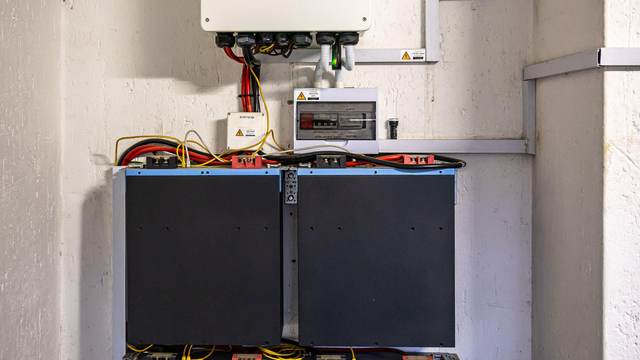
Power gets the headlines, but water is the harder half, heat is the biggest load, and the county has opinions about all of it. Each area is a full field of its own on the solutions pages — and they have to agree with each other before anything gets bought.






The tools
Walk out with a spec, not a vibe
Six calculators run the whole chain: audit what the house actually draws, size the array for the cloudy week instead of the brochure day, size the bank in days of autonomy, size the generator whose only job is recharging it, size the water tanks. Out the other end comes a finished spec — array watts, battery kilowatt-hours, inverter surge, tank gallons — concrete enough to hand to a vetted installer, post to a forum thread, or tape to the garage wall.
For calibration: in July 2026, about $5,000 of hardware buys a 6 kW-class inverter and 13 kWh of rack battery if you do the wiring yourself. The calculators tell you whether that’s your number, or half of it.
- Split-phase 120/240 checked before the parts list exists — the well pump and dryer don’t care about your feelings.
- Surge loads and idle draw counted; 50–60 W of inverter idle will eat a small bank overnight.
- Sized for the worst month, because undersizing is the community’s most-repeated regret.
- Every result shows its working — re-run it, argue with it, screenshot it for the thread.
Vetted installer matching
Backup, hybrid, or all the way off?
Whether the trigger was a $281 January bill, a dark Fourth of July, or a land listing you can’t stop refreshing — tell us the site and the loads, and we’ll scope it end to end.
- We turn your note into a spec: loads, array, bank, the works.
- One to three vetted pros quote against that spec — not against a blank check.
- Your details go to them and no one else: never resold, never blasted to a list.
- The spec is yours either way — hire them, or build to it yourself.
It’s free to you. The installer covers the introduction fee, not you — nothing here costs you a cent, and there’s no obligation to hire anyone.
Eight reads for the summer the grid blinked

For installers
Install off-grid systems? Get vetted leads.
The homeowners here arrive with a finished spec — loads, array, battery, budget. Take the ones in your territory: buy a lead at a flat price or bid to own it exclusively, and only ever pay for the ones you win.