


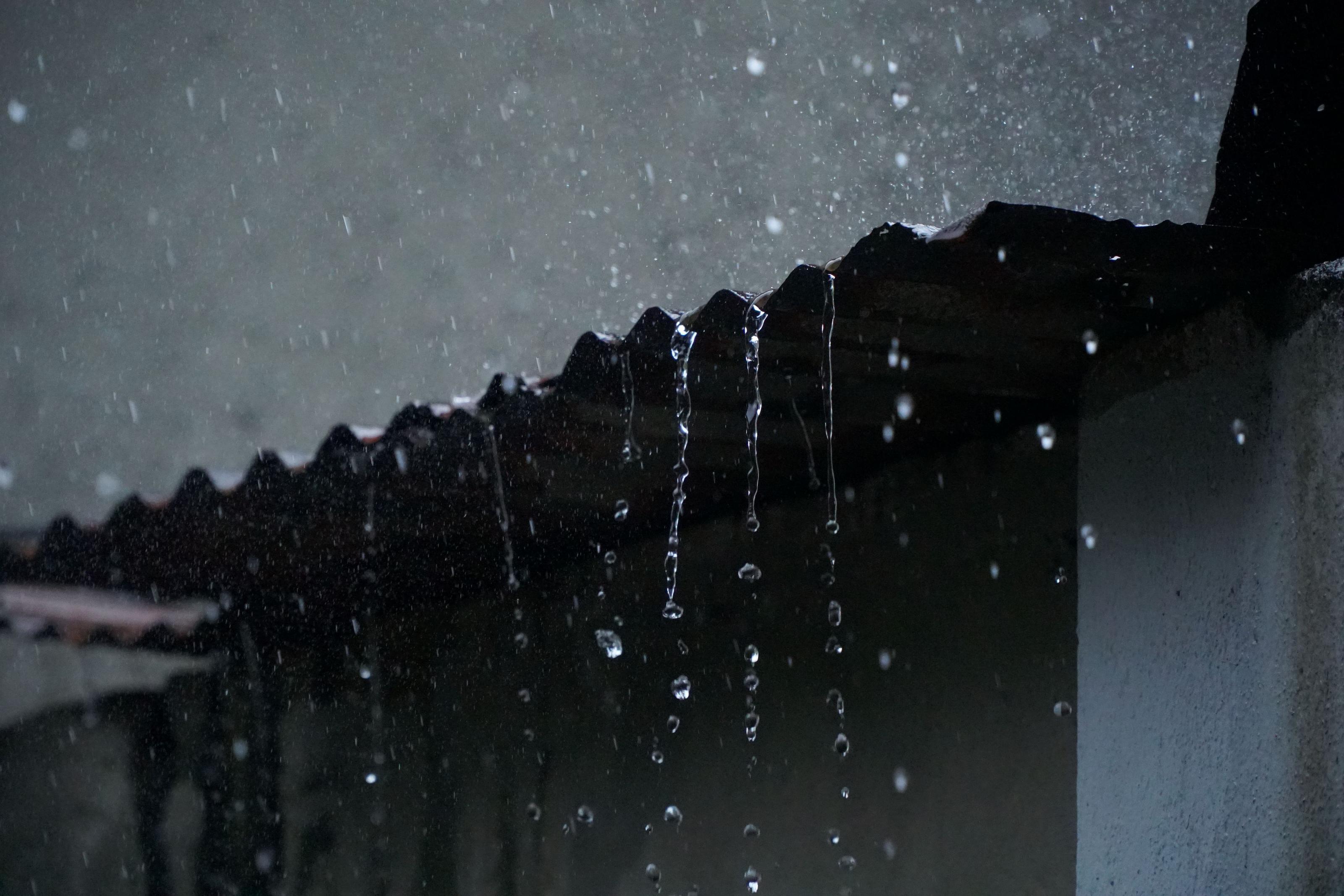
Nobody’s off-grid system has ever failed because an expensive LiFePO4 bank couldn’t hold a charge. It failed because a cable gland worth a few dollars or euros got skipped, or a bag of silica gel worth even less never made it into the box, and six months later the difference showed up as green fuzz on a busbar instead of power on demand. Waterproofing is the least glamorous line item in any off-grid build — nobody specs a system around a cable gland — and it is also the line item most likely to quietly undo everything else on the spec sheet.
Rainproof Isn’t Dry — the Condensation Nobody Sizes For
Start with the failure mode almost nobody plans for, because it doesn’t look like a leak. A battery or inverter enclosure rated to keep rain out does exactly that — and then quietly seals in whatever humid air was already inside it the day it was closed up. Every warm afternoon that follows pushes a little more moisture into that trapped air; every cool night pulls the enclosure’s internal temperature below the dew point, and that moisture condenses on the coldest metal surface inside — a busbar, a terminal lug, the underside of the lid. It doesn’t take a leak. It takes a sealed box, a day/night temperature swing, and time. Run that cycle every day for a season and the result is exactly the failure from the opening line: corrosion tracking across a terminal, or a BMS board that trips, resets, and eventually stops resetting — while the enclosure itself, the part everyone checked, is still bone dry on the outside and would pass a hose test with a rating to spare.
This is the part that trips people up: a tighter seal makes it worse, not better, if nothing inside the box can absorb or vent that trapped humidity. IP and NEMA ratings are real and worth having, but they describe how well an enclosure keeps water out. They say nothing about the water vapor already sealed in. Fixing condensation isn’t a job for a bigger rating number — it’s a job for a desiccant pack, a vented breather fitting, or both.
The pattern shows up often enough in installer callback logs to be almost routine. An owner reports the inverter throwing intermittent low-voltage faults on cold mornings that clear again by early afternoon, with the battery monitor showing nothing wrong in between. The 60-second postmortem, once someone finally cracks the enclosure lid, looks the same almost every time — a dusting of green-white corrosion across one busbar connection, condensation beaded on the inside of the lid, and no desiccant pack or breather fitting anywhere in the box. The enclosure itself did exactly what its rating promised; it just promised the wrong thing.
Key number
A sealed, correctly IP/NEMA-rated enclosure with no desiccant and no breather vent doesn’t stop condensation — it traps whatever humidity was already inside on install day and cycles it onto the coldest metal surface every night. A $3/€3 bag of silica gel or a $12–20/€12–20 vented breather fitting fixes what a $9,000/€9,000 battery bank’s own enclosure rating never will.
What IP and NEMA Ratings Actually Promise
Two rating systems cover the same ground from opposite sides of the Atlantic: IP (IEC 60529), the international standard used almost everywhere including European builds, and NEMA, the US enclosure standard. Both grade ingress from outside the box — dust as the first digit or letter class, water as the second. Neither certifies anything about what happens to humidity already inside.
| Rating | Protects against | Roughly equivalent | Use it for |
|---|---|---|---|
| IP54 / NEMA 3 | Limited dust, splashing water from any direction | Basic outdoor | Sheltered under a deep eave, not open exposure |
| IP65 / NEMA 4 | Dust-tight, low-pressure water jets | Standard weatherproof | Wall-mounted inverter/battery, open exposure |
| IP66 / NEMA 4X | Dust-tight, powerful water jets, plus corrosion resistance (4X) | Marine / coastal-grade | Coastal sites, salt air, washdown areas |
| IP67 / NEMA 6 | Temporary submersion — ≤1m, ≤30 min | Submersible-rated | Flood-prone low points, buried vaults |
| IP68 | Continuous submersion per manufacturer spec | Fully submersible | Underground junctions, well-pump wiring |
For a wall-mounted battery or inverter enclosure under a roof overhang, IP65/NEMA 4 is the realistic minimum in most climates; step up to IP66/NEMA 4X within reach of salt spray or direct washdown. None of that changes the condensation math above — pair the rating with a breather and desiccant, every time. The box itself is only half the spec; sizing what goes inside it — continuous vs surge watts, charger amps — is its own math, covered in the inverter/charger sizing guide.
Cold-Weather LiFePO4: the Housing Does Half the Work
Chemistry sets a hard limit that no enclosure rating touches. Nearly every LiFePO4 battery management system blocks charging below roughly 0°C/32°F, because pushing current into cold lithium-iron-phosphate cells plates metallic lithium onto the anode instead of storing it properly — a failure that’s invisible until it isn’t. Discharge is far more forgiving; most packs will still deliver power down to around -20°C (-4°F). The two numbers get confused constantly, and the confusion is expensive: a bank that ran the house fine all through a cold night can simply refuse the next morning’s solar, because ambient temperature never crossed the charge threshold — and the monitor still reports a perfectly healthy battery that just isn’t charging.
Three fixes, roughly in order of cost. Site the bank somewhere it never sees a hard freeze — an insulated utility closet or conditioned space beats an unheated shed before a dollar gets spent on hardware. Buy or retrofit a pack with a built-in heater pad, standard on most quality drop-in units now, which self-warms the cells before a charge cycle is allowed to start. Or build a small, low-wattage-heated, insulated battery cabinet around a bank that genuinely has to live somewhere exposed. Whichever route, the enclosure decision and the battery-chemistry decision are really one decision — sizing usable capacity without checking where the bank physically lives is exactly the gap covered in the LiFePO4 vs lead-acid sizing guide.
Sealing Cable Entries — the Detail That Actually Fails First
Every enclosure has to let wire in, and the hole is where real-world leaks start — not through the box wall, through the entry. A knockout with a rubber grommet and a bead of silicone caulk looks sealed on installation day and stops looking sealed the first time the cable flexes, the caulk cracks, or UV breaks down the grommet. The fix is a proper compression cable gland, sized to the actual cable outside diameter rather than the nearest knockout size, tightened enough to compress its internal seal without crushing the cable jacket. Run a drip loop — a deliberate downward sag in the cable before it reaches the gland — so water tracking along the insulation drips off at the low point instead of wicking straight into the entry. For conduit runs, duct seal or a purpose-made conduit sealant at both ends stops the conduit itself acting as a chimney that pulls humid air in and out with every temperature swing — the same trapped-air problem as the enclosure, just relocated to a pipe.
None of this is expensive. A proper IP68 compression gland costs a few dollars or euros depending on cable size; a tube of conduit sealant costs less again. Set against a battery bank, inverter or charge controller running anywhere from four figures to well into five, it’s a rounding error — and it’s the one that gets skipped anyway, because it’s boring and the box already looked sealed.
Corrosion Control — Especially Once Salt Air Is Involved
Water finds its way to metal eventually however good the sealing is; corrosion control is what happens after it does. Dielectric grease on every outdoor lug and terminal displaces moisture and blocks oxygen at the metal contact, and it’s cheap enough to apply everywhere rather than rationing it. Dissimilar metals in contact — a copper lug on an aluminum busbar, plain zinc-plated hardware next to stainless — set up galvanic corrosion that eats the less noble metal first; tinned copper or stainless hardware throughout costs barely more at purchase and avoids the problem entirely. Within a few miles of open coast, budget for genuinely marine-grade connectors and an annual terminal inspection rather than a five-year one — salt-laden air finds the one ungreased lug a plain rural install would never have exposed. Keep drainage in mind alongside sealing, too: an enclosure with a low-point drain hole, properly meshed against insects, sheds the water that does get in instead of holding it against a terminal indefinitely.
Shelter for the Equipment — and for the People Running It
Equipment shelter and human shelter are solving the same physics problem at wildly different scales, which is worth remembering when either one gets designed in isolation. A battery/inverter enclosure needs to be weathertight without being airtight — heat has to leave a working inverter and a charging battery bank, so a sealed, uninsulated black box sitting in direct sun is its own failure mode (overheating) stacked on top of the condensation failure mode (cold nights) inside the same twenty-four hours. The usual answer is a vented, roofed equipment shed or lean-to: a roof overhang that keeps rain and direct sun off the enclosures, louvered vents with rain baffles for airflow, and enough elevation off grade that a heavy-rain puddle never reaches the lowest cable entry.
The living space around that equipment runs the identical trapped-humidity logic at building scale — a tightly air-sealed cabin with no vapor barrier and no planned make-up air gets condensation in wall cavities for exactly the same reason a sealed junction box gets it on a busbar (the ventilation half of that equation has its own page). Pairing the building envelope with the right heating and cooling load is its own sizing problem, covered in heating & cooling; where the battery bank actually lives day to day, and how it’s protected once it’s there, is covered in battery storage. If a site hasn’t been chosen yet, exposure, drainage and microclimate belong in due diligence before the pad gets poured, not after — see the land-buying checklist.
And if the building itself is still ahead of you, the kit market has quietly become the off-grid default for getting a sound envelope up fast. Engineered cabin and barndominium shells run roughly $20–50 per square foot delivered in the US — call it $40–80k for a 40×60 shell, against a national average near $230k for a comparable finished build — and they arrive with stamped plans a rural county will actually accept, which matters more than the steel. Because you dry a kit in yourself, every envelope detail on this page sits under your control from the first screw. In Europe the same slot is filled by timber-frame and log kit houses, with the commune’s habitability rules playing the county’s role.
Before You Build: the Field Checklist
The version of this that actually gets used is the short one taped inside the equipment shed door, not the long one in a folder. Run through it before the season that will test it, not after:
- Outdoor battery/inverter enclosure rated IP65/NEMA 4 minimum; step up to IP66/NEMA 4X within reach of salt spray or washdown.
- A desiccant pack or vented breather fitting inside every sealed enclosure — checked and replaced on a schedule, not just installed once.
- Every cable entry through a properly sized compression gland with a drip loop — never a bare knockout and caulk.
- LiFePO4 sited where it won’t be asked to charge below ~0°C/32°F, or fitted with a heater pad that warms the cells before charging starts.
- Dielectric grease on every outdoor lug and terminal; tinned copper or stainless hardware, especially near coastal air.
- A low-point drain on every enclosure that could ever hold standing water, meshed against insects.
- Equipment shelter vented for heat and roofed against rain and direct sun — not sealed airtight.
- An annual inspection scheduled before the season that will actually test it: first hard freeze, first heat wave.
What NEMA or IP rating does an outdoor battery enclosure actually need?
For most wall-mounted battery and inverter installs under a roof overhang, IP65 or NEMA 4 is the practical minimum — dust-tight with protection against low-pressure water jets. Within reach of salt spray, direct washdown, or open coastal exposure, step up to IP66 or NEMA 4X, which adds corrosion resistance to the same water protection. The rating only covers ingress from outside, though — pair it with a desiccant pack or breather vent, or a well-sealed box just traps humidity instead of keeping it out.
Can a LiFePO4 battery bank just live outside year-round?
Physically, often yes, if the enclosure is rated for it — but the chemistry, not the enclosure, sets the real limit. Nearly every LiFePO4 BMS blocks charging below roughly 0°C/32°F to protect the cells, so an unheated outdoor bank in a cold climate can sit there fully wired and simply refuse the next morning’s solar. Either site it somewhere insulated, or use a pack with a built-in heater element.
My enclosure passed a hose test — why is there corrosion inside it?
Because a hose test only checks ingress from outside, and most in-box corrosion comes from humidity that was already sealed in on install day, condensing every time the box cycles below the dew point overnight. Add a desiccant pack or vented breather, and check dielectric grease on the terminals — the rating on the box door isn’t the part that failed.
Do batteries need a heater, or just better insulation?
Usually both, doing different jobs. Insulation slows how fast the enclosure’s internal temperature swings with the outside air — it buys time, not a floor. A heater, built into the pack or added to the cabinet, is what actually keeps the cells above the charge threshold on the coldest mornings; insulation alone in a genuinely cold climate just delays the moment charging stops, it doesn’t prevent it.