


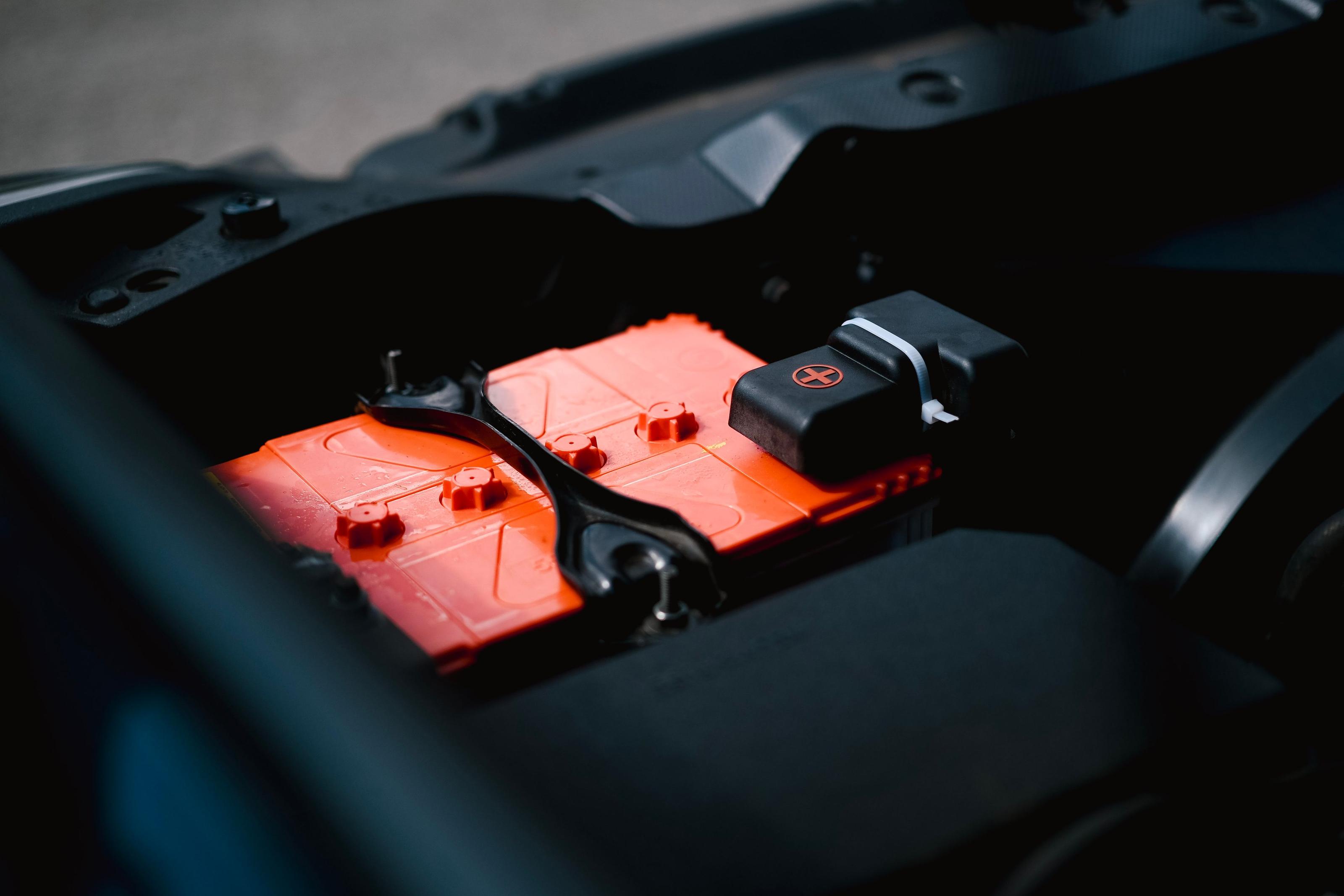
Ask three off-grid installers how big a battery bank you need and you can get three different numbers — not because they disagree about your loads, but because “how big” secretly means two different things. A battery bank has a nameplate capacity (the number printed on the box) and a usable capacity (what you can actually draw down without wrecking the battery), and the gap between those two numbers is set entirely by chemistry. Miss that distinction and you either buy twice the battery you need, or half of what your loads actually require.
This is a sizing guide, not a chemistry seminar — we’re solving for the number of kilowatt-hours to buy, not which cell type belongs inside a portable power station (that’s a different problem with a different answer). The method below works the same whether you’re speccing a $4,000 DIY lithium rack or a pair of $13,000 integrated units; only the inputs change.
Three Chemistries, One Job
Every stationary off-grid battery on the market in 2026 falls into one of three practical categories, and each one answers “how big” differently before you’ve done any math at all.
- Flooded and AGM lead-acid — the lowest sticker price per kilowatt-hour, tolerant of basic charge controllers, and still a reasonable call for a low-cycle weekend cabin. The trade-off is depth of discharge: run one past 50% regularly and you’re trading away cycle life for capacity you can’t keep using.
- LiFePO4 (lithium iron phosphate) — the default for anyone cycling a bank daily. Higher price per nameplate kilowatt-hour, but a much higher usable share of that kilowatt-hour, several times the cycle life, no watering, no venting, and a fraction of the weight.
- Integrated systems — Tesla Powerwall and similar (Enphase, FranklinWH, Generac PWRcell) — a battery, inverter, BMS, and monitoring app sold as one warrantied appliance. Built for grid-tied backup homeowners who want a code-approved, zero-DIY install, not for stacking the cheapest possible capacity.
The Sizing Method: From Daily Load to Nameplate kWh
Every credible battery-bank sizing method reduces to the same four numbers, applied in order. Skip a step and the chemistry comparison further down ends up comparing the wrong things.
Key formula
Usable kWh needed = average daily load (kWh) × days of autonomy.
Nameplate kWh to buy = usable kWh needed ÷ depth of discharge for your chemistry.
The four-step version
- Get your real daily load in kWh, not watts. Sum every circuit’s watt-hours over a full day — a proper load audit, not eyeballed panel ratings — because off-grid load estimates that skip this step are wrong more often than they’re right.
- Pick a days-of-autonomy target. One to two days is normal if a generator or the grid is your real fallback; three to five is normal for a remote off-grid home with no generator. This number is a judgment call about climate and risk tolerance, not physics.
- Multiply the two to get the usable kWh you need to be able to pull from the bank between recharges.
- Divide by your chemistry’s usable depth of discharge to get the nameplate kWh you actually have to purchase — this is the step almost everyone skips, and it’s exactly where lead-acid’s real cost hides.
| Chemistry | Usable DoD | Cycle life | Round-trip efficiency | Real-world lifespan |
|---|---|---|---|---|
| Flooded lead-acid | 50% | 300–500 cycles | ~80% | 3–5 years |
| AGM / gel lead-acid | 50–60% | 500–800 cycles | ~80–85% | 4–7 years |
| LiFePO4 | 80–100% (size at 90%) | 3,000–6,000 cycles | 95–98% | 10–15+ years |
| Powerwall-class, integrated | ~100% (marketed usable) | rated for daily cycling | ~90% | 10–15 yr by brand, unlimited cycles |
A Worked Example: Sizing a 9 kWh/Day Off-Grid Home
A well-insulated off-grid cabin with efficient appliances, no electric heat, and a well pump averages about 9 kWh/day — a realistic, round number for the math. Call it two days of autonomy, since there’s a generator on site for anything longer.
Usable kWh needed: 9 kWh/day × 2 days = 18 kWh.
That single 18 kWh figure now produces three completely different shopping lists, because each chemistry needs a different nameplate size to deliver it:
- Flooded lead-acid (50% DoD): 18 ÷ 0.50 = 36 kWh nameplate.
- LiFePO4 (90% DoD): 18 ÷ 0.90 = 20 kWh nameplate.
- Powerwall-class (fixed 13.5 kWh blocks): two units, 27 kWh usable — there’s no smaller increment, so you buy 50% more capacity than the target whether you need it or not.
Fifteen years, three chemistries
Nameplate size is only half the story — chemistry also decides how many times you buy the bank over a normal 15-year system life. Figures below are USD reference points to show the math; for region-priced hardware, see the picks further down.
| Chemistry | Nameplate for 18 kWh usable | Upfront | Typical lifespan | ~15-year total |
|---|---|---|---|---|
| Flooded lead-acid | 36 kWh | ~$5,600 | 3–5 yrs | ~$17,000–22,000 (3–4 sets) |
| LiFePO4, DIY 48V | 20 kWh | ~$4,400 | 12–15+ yrs | ~$4,400–6,000 (1 set) |
| Powerwall-class, installed | 27 kWh (2 units) | ~$20,400 | 10–15 yr by brand | ~$20,400–24,000 |
Lead-acid and LiFePO4 figures are battery hardware only; the Powerwall-class figure is fully installed — inverter, labor, monitoring, and warranty support included. Add roughly $3,000–7,000 of inverter, charge controller, and install labor to the DIY numbers for a true turnkey comparison, and LiFePO4 still comes out dramatically ahead of both lead-acid and the integrated system at this capacity: about 4.6× cheaper than the Powerwall-class pair, which also delivers 50% more capacity than the worked example actually asked for.
The global average lithium battery pack price fell to about $108/kWh in BloombergNEF’s late-2025 pack-price survey, blending EV and grid-scale packs. Consumer retail LiFePO4 still runs $150–$280/kWh assembled once you’re buying a drop-in 48V unit with a BMS, enclosure, and Bluetooth monitoring built in — but that wholesale number is exactly why lithium’s sticker price keeps closing the gap on lead-acid every year, even before the depth-of-discharge math above tilts the comparison further in its favor.
Run your numbers
Skip the spreadsheet
Enter your own daily load, autonomy target, and depth of discharge and the calculator returns usable and nameplate kWh, total amp-hours, and a suggested module string — adjust the DoD field to model LiFePO4 or a lead-acid bank — plus one pack-cost line at current LiFePO4 pricing.
Where a Powerwall-Class System Actually Wins
The math above makes an integrated system look like the expensive option, and per usable kilowatt-hour it is — but that comparison is only fair if the buyer actually wants the thing a DIY rack is selling. A Powerwall-class unit isn’t competing on $/kWh; it’s competing on not having to become your own battery engineer.
That premium buys a few things a raw kWh number doesn’t capture: a UL-listed, code-inspectable install your insurer and utility both recognize without a fight; a single warranty phone number instead of chasing down a BMS manufacturer overseas; an app that reports state of charge without you building a monitoring stack yourself; and a form factor designed to hang in a garage or utility closet without a dedicated battery room. For a grid-tied homeowner who wants storm backup and touches the system twice a year, that’s a legitimate trade of dollars for zero maintenance risk.
Where it stops making sense is at the scale a genuinely off-grid, no-generator home needs. Stacking Powerwall-class units to reach 40–60 kWh of usable storage means paying the full integration premium — and the fixed-increment oversizing shown above — on every single block, when a DIY LiFePO4 rack scales in whatever size the job actually needs. Past two or three units, most serious off-grid builds move to a dedicated inverter/charger plus a right-sized lithium bank instead.
Six Ways a Battery Bank Gets Sized Wrong
- Discharging lead-acid like it’s lithium. Running a flooded or AGM bank down to 80–90% because the inverter’s low-voltage cutoff allows it collapses cycle life from hundreds of cycles to dozens. The cutoff has to match the chemistry, not the inverter’s factory default.
- Sizing the battery for round-trip losses instead of the array. The roughly 20% lead-acid loses — and the roughly 5% LiFePO4 loses — every charge/discharge cycle is lost as heat, not stored. That’s a reason to oversize the solar array, not the battery bank itself.
- Zero autonomy buffer. Sizing exactly to average daily load with no cloudy-day margin means the first overcast stretch puts you on the generator, or in the dark, on day one of ownership.
- An inverter undersized for the bank’s real discharge capability. A battery that can deliver more amps than the inverter and BMS are rated for isn’t extra safety margin — it’s a mismatched system waiting to trip. See our inverter/charger sizing guide for how to match the two.
- Paralleling mismatched lithium modules. Different ages, brands, or BMS firmware fight each other on a shared bus, and the weakest module drags the whole bank down. Expand with identical modules, or don’t parallel at all.
- Ignoring cold-weather charging. Nearly every LiFePO4 BMS blocks charging below freezing to protect the cells. An unheated shed install in a cold climate needs an internal heater pad, or the bank simply won’t take a charge on the coldest days of the year.
Battery picks, priced for your region
The specific packs and going rates below update automatically for US or European pricing — worth a look before you spec anything off the worked example above.
Can I mix lead-acid and lithium batteries in the same bank?
No — don’t put them in parallel on the same string. Different voltage curves and charge profiles confuse a shared charge controller, and the two chemistries age at different rates, so the healthiest battery gets dragged down by the weakest. If you’re transitioning from lead-acid to LiFePO4, replace the whole bank in one pass, or run the two chemistries on physically separate charge and discharge circuits during the changeover.
How many days of autonomy do I actually need?
Most grid-connected backup systems run 1–2 days, since the grid or a generator is the real fallback for anything longer. A true remote off-grid home without generator backup usually plans for 3–5 days to survive a multi-day low-solar stretch. More autonomy isn’t free — every extra day multiplies the nameplate kWh, and the cost, by the same factor.
Is DIY LiFePO4 safe without a dedicated fire-rated battery room?
LiFePO4 is the most thermally stable lithium chemistry available and doesn’t off-gas hydrogen the way flooded lead-acid does (which needs ventilation by code in most jurisdictions). “Safe” still depends on buying packs with a real BMS and cells tested to UL 9540A or an equivalent standard, and on following your local electrical code for disconnects, fusing, and enclosure requirements — confirm with your jurisdiction before assuming a closet install is compliant.
Does a Tesla Powerwall use the same LiFePO4 chemistry as a DIY bank?
It depends on the generation and market — Tesla has used both NMC and LFP cells across Powerwall’s history and doesn’t always publish the exact chemistry for a given unit and region. It doesn’t change much for the buyer either way: you’re paying for an engineered, warrantied, code-approved appliance, not choosing a cell chemistry the way you would building a DIY bank.
Keep reading
- How to Size an Off-Grid Solar System: Load → Panels → Battery → Days of Autonomy — where the battery bank fits in the full sizing chain.
- The Off-Grid Load Audit: The Phantom Load That Drained a $9k Bank Overnight — the daily watt-hour number the bank math depends on.
- LiFePO4 vs NMC: Which Battery Chemistry Belongs in Your Off-Grid Power Station — the same chemistry question inside portable power stations.