


At 2:40 a.m., the inverter shut the house down — not because anything had broken, but to protect a 15 kWh battery bank that had no business being at 11% that early into the night.
Call them Mara and Dev. Eighteen months earlier they’d traded a subdivision outside Austin for nine acres, a well, and — after pricing three installers — a LiFePO4 wall battery, installed for just under $9,000. The solar array was sized carefully: enough to refill the bank on an average day, with headroom for a couple of cloudy ones in a row. For fourteen months, it worked exactly like the spec sheet said it would.
Then February brought three gray days back to back. By the second night, the bank wasn’t just running low — it was cratering hours before anyone expected. The installer’s post-mortem took twenty minutes with a clamp meter, and the culprit wasn’t the well pump, the freezer, or anything on the original sizing worksheet. It was a stack of small things nobody had ever measured: the inverter’s own idle draw, a three-node Wi-Fi mesh, a security panel with two always-on cameras, the well pressure switch’s controller board, the propane water heater’s ignition module, and a drawer of chargers and standby electronics that never fully sleep. None of it had a line on the sizing sheet, because none of it had ever been switched off long enough for anyone to notice it was there.
Add it up and the house was quietly burning about 125 watts, continuously, before a single light switch moved on purpose. That’s 3 kWh a day — spent on nothing, every day, rain or shine, whether anyone was home or not.
The Math a Sizing Worksheet Never Catches
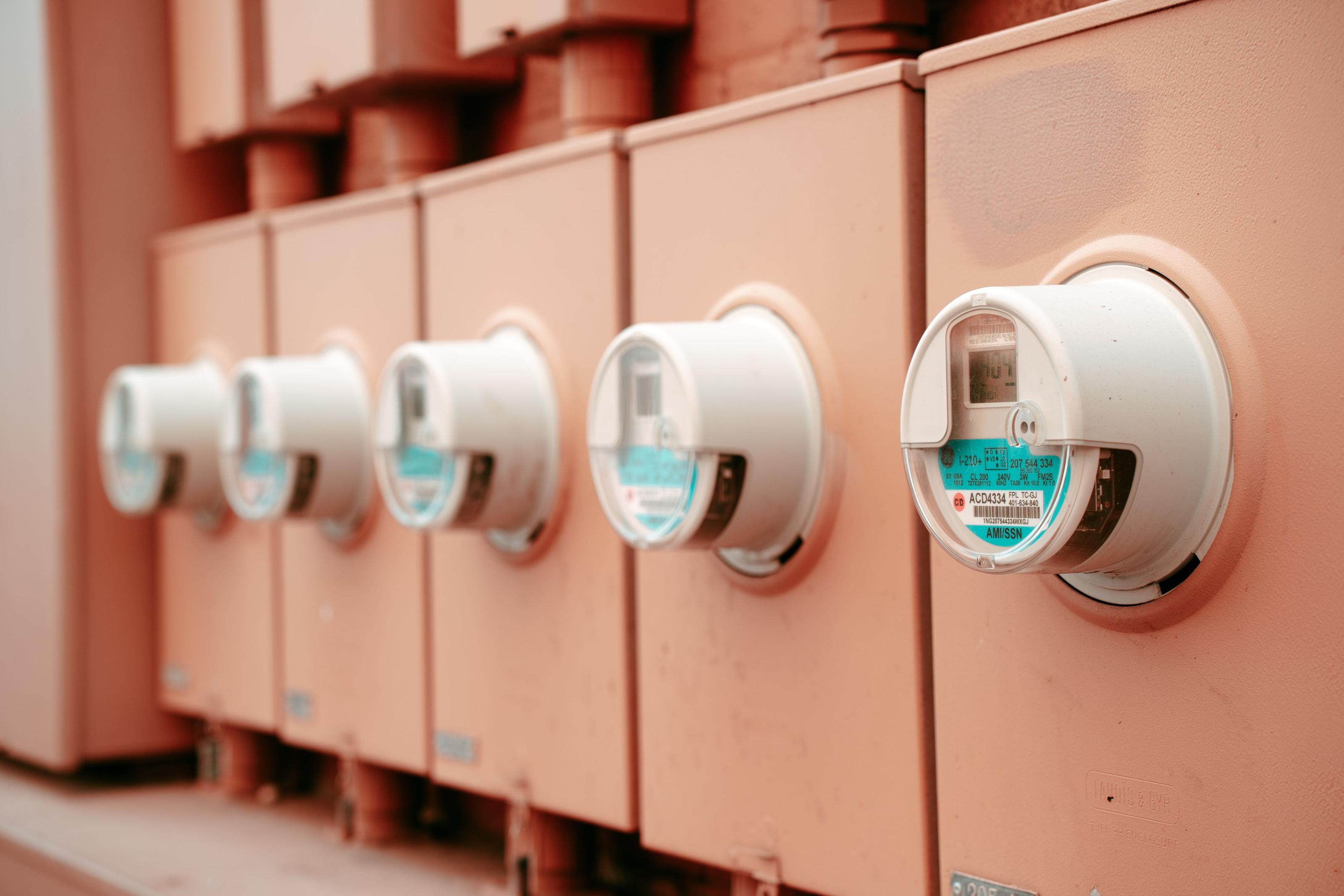
Most people size an off-grid system the same way: list the big, named appliances — fridge, well pump, a few lights, maybe a laptop — estimate hours of use, and multiply. That’s a reasonable method for the loads you think about. It is structurally blind to the loads you don’t, and every occupied building runs a floor of power nobody consciously switches on: inverter self-consumption, networking gear, security systems, control boards, standby transformers, clocks. Utilities call it phantom load, vampire draw, or standby power, and in a grid-tied house it’s a rounding error — 50–100 watts lost inside a power bill nobody reads line by line.
Off-grid, that same 50–100 watts isn’t a rounding error. It’s a direct claim on a battery bank that might hold nine or ten usable kilowatt-hours, total. A load that’s invisible on a $180 monthly grid bill can be a quarter of an off-grid home’s entire daily energy budget — and unlike the fridge or the well pump, it runs 24 hours a day, 365 days a year, whether the system was sized for it or not.
A real load audit only earns the name if it gets three things a spec-sheet estimate skips:
- Every circuit that’s ever plugged in — not just the ones you use on purpose
- Measured watts, not the number printed on the nameplate
- A separate, honest number for what draws power when nobody’s doing anything at all
Finding Your Floor: The 24-Hour Zero-Activity Test
The fastest way to find the number that actually matters is to stop guessing and read it off the system itself. Almost every modern inverter or battery monitor — Victron, Sol-Ark, EG4, a basic shunt-based monitor — logs a load curve. Pull up the graph for any night between roughly 1 a.m. and 5 a.m., when nobody is cooking, charging tools, or running the well pump on purpose. Whatever wattage that curve flatlines at is your floor: the phantom load the sizing worksheet never had a line for. Multiply it by 24 and you have your daily phantom-load kilowatt-hours — no extra hardware required.
If the system doesn’t log history yet, a $30–$40 clamp meter or an in-line power monitor at the main panel gets you the same number in one overnight sit. In the US, a plug-level meter on individual 120V circuits isolates offenders one at a time; in Europe, a smart energy-monitoring plug on 230V circuits does the same job. Either way, the goal is identical: a measured number, not a nameplate guess.
What to Actually List
A working audit sorts every load into one of three buckets: phantom (draws power continuously, nobody decided to turn it on today), cyclical (cycles on and off by itself — compressors, pumps, thermostats), and scheduled (you decide when it runs). Here’s what that looks like for a typical off-grid home, with real numbers:
| Load | Type | Draw | Duty / hours | Daily Wh |
|---|---|---|---|---|
| Inverter/charger self-consumption | Phantom | 30 W | 24 h | 720 |
| Wi-Fi mesh (3 nodes) + modem | Phantom | 22 W | 24 h | 528 |
| Security panel + 2 cameras | Phantom | 18 W | 24 h | 432 |
| Well/borehole pump controller | Phantom | 6 W | 24 h | 144 |
| Water heater ignition/control board | Phantom | 9 W | 24 h | 216 |
| Standby electronics (chargers, boxes, clocks) | Phantom | 40 W | 24 h | 960 |
| Phantom floor, subtotal | — | 125 W | 24 h | ~3,000 |
| Chest freezer (compressor, averaged) | Cyclical | 120 W run | ~35% duty | ~1,000 |
| Well pump run (US 240V) / borehole pump (European 230V) | Cyclical + surge | 750–1,500 W run | 30–45 min/day | ~500–900 |
| LED lighting, whole house | Scheduled | 50 W avg | 4 h | ~200 |
| Laptop, kitchen, entertainment | Scheduled | varies | 3 h | ~400 |
Same physics on both sides of the Atlantic — watts times hours equals watt-hours — but the hardware changes the specifics. A US well pump is commonly wired 240V split-phase and draws roughly the same power as a European 230V single-phase borehole pump of similar horsepower; the voltage and wiring differ, the wattage and duty-cycle math don’t. Inverter idle draw tends to run a touch higher on US 120/240V split-phase units (extra transformer stages) than on single-voltage 230V European units — worth checking on the spec sheet, but rarely the difference between a sized system and an undersized one. The phantom floor as a whole is.
Key number
125 continuous watts you never measured is 3 kWh every 24 hours. On a modest 9 kWh/day off-grid home, that’s a third of the entire daily budget — spent on nothing, before a single load turns on for a real reason.
Running the Numbers: Worksheet vs. Reality
Here’s the gap that put Mara and Dev’s bank on the floor at 2:40 a.m. Their installer’s original sizing worksheet — the named, obvious loads — added up to a reasonable 6.0 kWh/day. Measuring the actual system for a week added the phantom floor on top:
| Sizing worksheet (named loads) | Measured audit (+ phantom floor) | |
|---|---|---|
| Daily energy use | 6.0 kWh | 9.0 kWh |
| Usable capacity (15 kWh bank, 80% DoD) | 12.0 kWh | 12.0 kWh |
| Assumed autonomy | 2.0 days | 1.3 days (~32 hrs) |
Nobody changed the battery. Nobody changed the array. The system just wasn’t the system on paper — it was pushing 50% more energy through it than the design assumed, every single day, and the two-day autonomy buffer the whole design leaned on was actually 32 hours. Three gray days in a row was never supposed to be a problem. Against the real number, it was always going to be one.
Surge Is a Different Problem Than Energy
One more distinction the audit has to keep straight, because conflating the two is its own classic mistake: energy (kWh) sizes your battery; power (W), for a fraction of a second, sizes your inverter.
Energy problem
A well pump running at 750 W for 40 minutes a day uses about 0.5 kWh. That number goes into the daily total and helps size the battery.
Power problem
The same pump can pull 3,000–4,500 W of locked-rotor surge for well under a second at startup. That number never touches the battery math — it sizes the inverter’s surge rating.
Undersize the surge rating and a “fully charged” system trips off the instant the pump kicks on, which looks exactly like a battery problem and isn’t one. Audit both numbers separately, and label them separately, or the eventual fix will target the wrong hardware.
Do the Audit Before You Buy Anything
The order matters more than the math. Size hardware to a guess and the hardware will be perfectly sized — to the guess. Accurate math applied to a wrong input still produces a wrong answer. Walk every circuit in the house, or the plan for the house, including the ones that are easy to forget: garage door opener standby, water softener, propane/CO detectors, sump pump float-switch electronics, a second modem kept “just in case.” Get real watts on each one, run the 24-hour zero-activity test for the floor, and only then turn the total into panels, battery kWh, and inverter rating.
That last step is exactly what a proper sizing tool does — and it’s only ever as good as the number you hand it.
How much phantom load is normal for an off-grid home?
There’s no universal number — it depends entirely on your gear — but as a rough guide: under about 50 W continuous is tight and well-optimized; 80–150 W continuous is common and perfectly survivable if the bank was sized for it; north of 200 W continuous usually means there’s a small appliance running that nobody actually chose, and it’s worth hunting down.
Do I need to buy a clamp meter to do this properly?
It helps, but it isn’t required. If the inverter or battery monitor already logs history, the free version of this audit is reading the 1–5 a.m. flatline off a graph that already exists. A meter earns its keep when you need to isolate which specific circuit is responsible.
Won’t turning off Wi-Fi or security defeat the point of automation?
The point isn’t to turn things off — it’s to account for them on purpose. Some phantom loads (a well controller, a freezer) are non-negotiable and belong in the design from day one. Others (a mesh node covering a room nobody sleeps in, a second modem kept “just in case”) are worth trimming once you can actually see what they cost. The audit turns that into an informed decision instead of a 2 a.m. surprise.
How is a load audit different from a solar sizing calculator?
A sizing calculator turns a load number into hardware — panels, battery kWh, inverter rating. A load audit is where that number has to come from. Feed a calculator a guess and it will size hardware perfectly to the guess; the audit is what makes the input real before the hardware gets bought.