


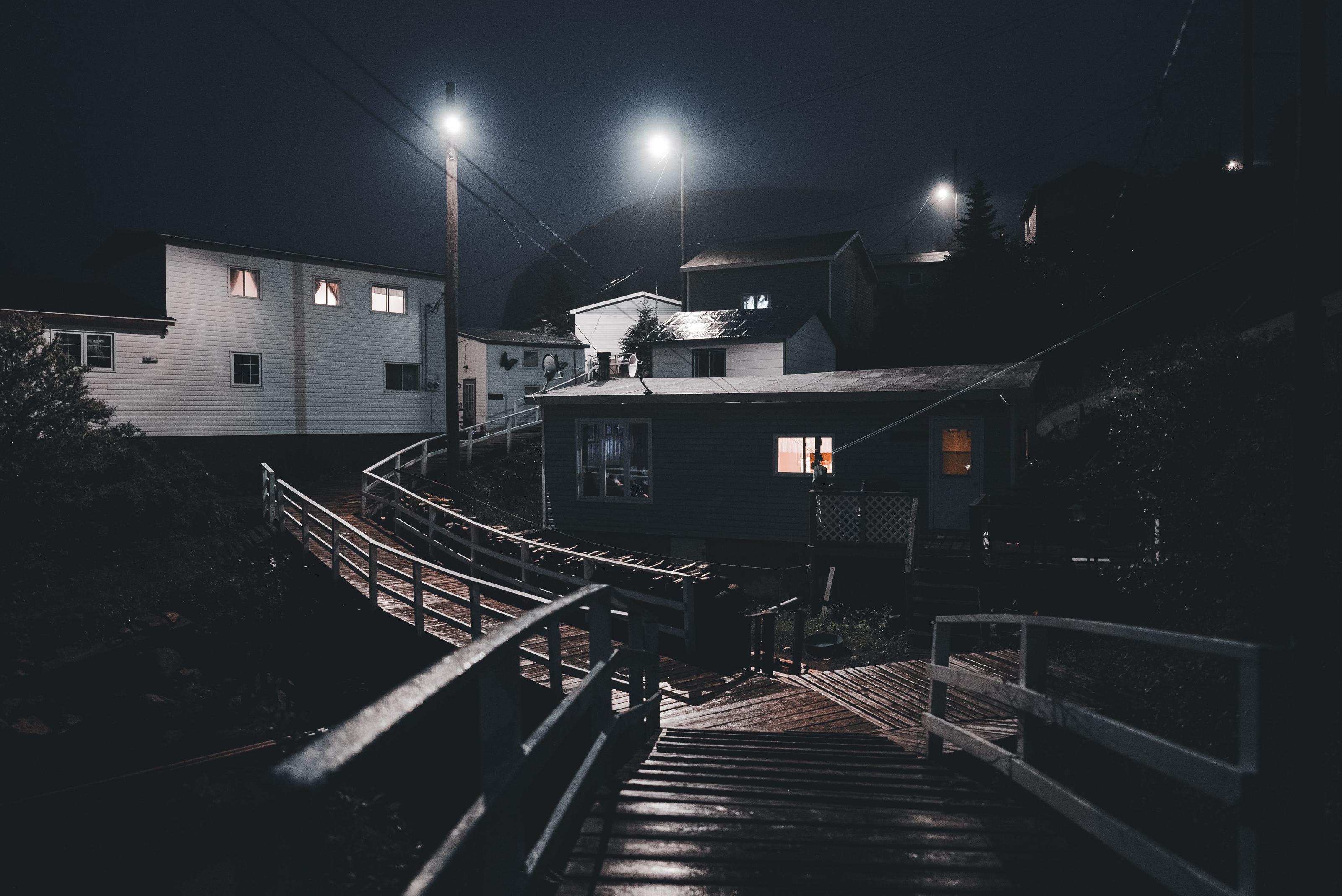
6:14 p.m., a Tuesday in November. The porch light flickers twice and the house goes quiet — not the ordinary quiet of a house at rest, but the specific quiet of a refrigerator compressor cutting out mid-hum. You check your phone. No bars from the neighbors either, so it isn’t your breaker. You find a candle, feel briefly proud of owning one, and decide it’ll be back by morning.
It usually isn’t. And the week that follows breaks in an order almost nobody guesses correctly — ask around and most people put the freezer first. The freezer is nowhere near first. Here’s what actually happens, hour by hour, and exactly what a $1,000 power station buys you against it — and what it doesn’t.
The whole week, compressed:
| Time since outage | What actually breaks | Why |
|---|---|---|
| Hour 0 | Forced-air heat (gas or oil) | Blower, igniter and gas valve all run on AC power — no electricity, no flame, tank full or not |
| Hour 1–3 | Nothing visible yet | Fridge and freezer coast on stored cold; phones and routers run on their own batteries |
| Hour 2–6 | Water pressure | A 20–40-gallon pressure tank actually holds only about 6–12 usable gallons — it empties after a shower and a couple of flushes, with no pump to refill it |
| Hour 4 | Food-safety clock starts | An unopened fridge is generally considered safe for about 4 hours; every hour past that is added risk |
| Hour 6–12 | Basement/cellar flooding risk | A sump pump needs power at the exact moment a storm just took the power out |
| Hour 8–24 | Cell & internet service degrades | Local towers and exchanges run down their own battery and generator backup on roughly your same clock |
| Hour 24–48 | Freezer contents (half-full) | A half-full freezer holds safe temperature about 24 hours; a full one, closer to 48 |
| Day 3–5 | Hygiene & medication refrigeration | No pumped water for flushing or washing; insulin and similar cold-chain medication now at real risk |
| Day 5–7 | The house itself | Frozen or burst pipes in winter, heat-stress risk in summer — inconvenient becomes dangerous |
Hour Zero: “Gas Heat” Was Never as Grid-Independent as You Thought
Most people assume a gas furnace is the one system that survives a blackout — there’s a full tank or a live gas line sitting right there, untouched by the outage. It doesn’t survive it. A modern forced-air furnace is a gas-fed, electrically-controlled machine: the igniter, the gas valve solenoid and the blower fan all run on ordinary AC power, and a hydronic boiler needs power for its circulator pump too. Cut the power and the flame never lights, tank full or not. The only heat sources that genuinely don’t care about the grid are the ones with no electronics anywhere in the loop — a wood stove, a masonry fireplace, an old propane heater with a standing pilot and no blower. Everything else goes cold in the same second the lights do, which is why heat, not food, is the loss that actually starts the week’s clock.
Hours 1–6: The House Is Running on Borrowed Everything
For the first stretch, nothing feels wrong. The fridge and freezer are coasting on stored cold, not current — a sealed box of frozen food is a surprisingly good battery. Your phone and laptop are running on their own charge. If there’s a UPS on the router, wifi survives a while too. This is the part of an outage that fools people into thinking the whole week will feel like this: fine, then fine, then fine again once the power comes back.
It won’t. Somewhere in this window, usually well before anyone thinks to worry about it, the house loses something more basic than any of that.
The First Real Loss Isn’t the Freezer — It’s the Tap
If your water comes from a private well or borehole — common on off-grid and rural properties on both sides of the Atlantic — the pump that pressurizes it runs on the same power that just died. What keeps water flowing for a while isn’t backup anything; it’s the pressure tank, a sealed bladder holding a cushion of already-pumped water. Tanks typically run 20–40 gallons total, but a bladder tank’s air pre-charge means only about a quarter to a third of that is ever usable before the pump has to run again — roughly 6–12 gallons in practice, not 20–40. That empties fast: one shower, a couple of toilet flushes and a pot filled for coffee can drain it before dinner. Then the tap sputters, coughs air, and stops. No amount of patience gets it back — only power does.
The same storm that took the grid down is often exactly why a basement or cellar needs its sump pump most. Heavy rain raises the water table right as the one pump keeping it out of the house loses power — and because everyone’s attention is on food and phones, it’s frequently the failure nobody notices until there’s standing water on the floor.
Hours 8–48: The Grid Outside Your Walls Is on the Same Clock
By now the food-safety clock is running too — an unopened fridge is generally considered safe for only about four hours, and every hour past that is added risk, not a grace period. But the more interesting failure is happening somewhere you can’t see it.
Key number
Cell towers typically run on internal battery for only 4–8 hours before switching to a diesel generator carrying roughly 24–72 hours of fuel. In a wide-area outage, the network itself can go dark before your phone’s own battery does — and there’s no fuel gauge for a tower you can check from the couch.
Which means a phone showing full bars but no service isn’t a glitch — it’s the local network running down its own backup power on roughly your same timeline, just a system you have zero visibility into. In a genuinely wide-area event, message delivery gets patchy and data slows to nothing well before any individual phone actually dies.
Day 3 to Day 7: Inconvenient Becomes Dangerous
By day two, a half-full freezer has crossed its safe window; a full one buys roughly another day past that before the same fate. Ice runs out. Without pumped water, flushing and washing both stop being simple. Anyone on refrigerated medication — insulin is the common example — is now managing a real medical risk, not an inconvenience. In winter, an unheated stretch of plumbing is on its own countdown to freezing and splitting; in summer, a house with no fans and no AC starts posing a genuine heat-stress risk to anyone elderly, very young, or already unwell.
This isn’t a hypothetical curve. Winter Storm Uri put more than 4.5 million Texas homes through almost exactly this sequence for up to four days in February 2021 — and the official death toll of 246 is now believed to undercount the real number considerably. A week without grid power isn’t a thought experiment about spoiled milk. It’s something that has already happened, on a timeline a lot like the one above.
What a $1,000+ Power Station Actually Covers
A portable power station in the $1,000–$1,500 class — roughly €950–€1,400 in Europe — typically holds 1–2kWh of LiFePO4 storage and outputs somewhere around 1,800–3,000W continuous. That’s a genuinely useful amount of power, applied to the right list: phones, a laptop, the wifi router, a string of lights, a CPAP or other medical device, all running for days off one charge. Plug in a fridge alone, on a bit of a ration, and a mid-size unit can usually cover a day or two.
It is not, on its own, a well-pump machine or a furnace replacement. The surge rating on the spec sheet might well be high enough to start a well pump once — but starting it once isn’t the job. The job is a household’s real water use, which means that pump cycling on a dozen times a day, each cycle pulling close to its full running wattage for a few minutes. A 2kWh battery holds about two hours of a 1,000W continuous load; spread across a day of normal cycling, it’s gone by evening, with no sun-powered top-up fast enough to keep pace with actual demand.
- Surge watts, not just running watts — a well pump’s start-up draw can run 2–3× its running wattage; check a unit’s surge rating against the pump’s locked-rotor amps, not its nameplate number.
- Total kWh against a real day, not a spec-sheet best case — a 2kWh unit holds about two hours of a 1,000W load run continuously, and a cycling pump adds up faster than it looks.
- A recharge plan for day two — a portable solar panel trickles a power station back up on a sunny day; without one, it’s a one-shot battery, not backup power.
- Voltage that actually matches your outlets — a US unit outputs 120V, a European one 230V; buying the wrong region’s model means it won’t run your pump at all, regardless of wattage.
Here’s the class of unit that actually delivers those numbers, not just advertises them:
| $1,000–$1,500 power station | Standby generator / whole-home battery | |
|---|---|---|
| Phones, laptops, wifi router, lights | Yes, for days | Yes, indefinitely |
| Fridge alone, rationed | Yes, roughly a day or two | Yes, indefinitely |
| Well or borehole pump | Can start it once; can’t sustain daily cycling | Yes |
| Sump pump through a multi-hour storm | Drains fast under repeated cycling | Yes |
| Central heat, AC or an electric heat strip | No — draw is too high and too continuous | Yes |
| Recharge without sun for 3+ days | No, unless paired with a generator | Yes — fuel or grid-scale battery |
| Needs an electrician to install | No — plug and play | Usually, yes |
When the Math Forces a Generator or Whole-Home Battery Instead
Once the must-run list includes a well or sump pump, central heat or AC, or “however long it takes, not just a couple of days,” a power station has quietly become the wrong tool for the job. What’s needed is continuous run capacity — either a properly sized standby generator on an automatic transfer switch, or a much larger, professionally installed battery bank with a whole-home inverter. Both solve the actual problem: not a single afternoon of charge, but power that doesn’t run out on its own clock. We’ve broken down how to choose between the two and how to size a standby generator against your actual critical-load list, rather than a guess based on square footage.
How long is a refrigerator actually safe to leave closed during a power outage?
Roughly four hours unopened, by general food-safety guidance on both sides of the Atlantic. After that, perishables should be treated as at-risk even if they still look and smell fine — the danger is bacterial growth, which doesn’t announce itself.
Will a gas furnace or boiler still work if the power goes out?
No, not unless it’s an older unit with a standing pilot and no blower fan. Modern forced-air furnaces and hydronic boilers both rely on AC power for ignition, gas valve control and air or water circulation — a full tank of propane or a live gas line doesn’t matter if the control board has no power to run on.
Can a portable power station run a well pump?
Many can start one — the surge rating is often high enough. What they usually can’t do is sustain a household’s real water use, because the pump cycles on repeatedly through the day and each cycle draws close to its full running wattage. A power station covers a well pump for an emergency top-up, not for a week.
At what point does an outage stop being inconvenient and start being dangerous?
Usually somewhere around day two to three: refrigerated medication is at real risk, freezer contents are lost, pumped water is gone, and in winter or summer extremes the house itself starts working against the people inside it. That’s the point the timeline above is built to help you get ahead of, not react to.