


Type “best country to go off-grid in Europe” into a search bar and every list says the same three words: Portugal, sun, done. None explain the part that actually decides whether you’re still living there legally in five years — and the clearest way to see it is the one big, rich, famously solar-friendly country that belongs on none of these lists. Germany hands out 0% VAT on a home solar-plus-battery system and exempts the income it generates from tax. It also makes it close to impossible, for an ordinary buyer, to legally build a house on raw countryside land at all — incentives and building permission are separate questions, and Germany answers them in opposite directions.
The reason is a single planning statute — and once you understand it, you have the filter for judging the other nine destinations below: not “which has the cheapest land” but “which will actually let me build.” That’s the ranking this guide runs — land price, planning-law friction, and December solar reality — for the nine places Europeans genuinely relocate to go off-grid, plus the one place they don’t, and why.
Why Germany Isn’t on the List
German planning law splits the country into zones, and only one matters here. Inside a municipality’s development plan or a built-up area, building is routine. Everything else — open countryside, forest edge, most of what an off-grid buyer wants — is the Außenbereich, governed by §35 BauGB, whose starting position is that it stays free of construction. It then lists, exhaustively, the projects allowed to override that default: agriculture, forestry, grid and utility infrastructure, and a handful of similarly location-bound uses. An ordinary house, built by someone not running a registered farm, isn’t on that list. Own ten empty hectares of German countryside outright and you generally still can’t get a Baugenehmigung to put a house on it — the parcel is legally unbuildable regardless of price.
There are narrow doors: §35(4) lets you convert a former agricultural building — a barn or farmhouse — into a home, within capped floor limits, and a working farm gets privileged status for a farm-linked dwelling. Neither helps someone buying a bare field to self-build. Build anyway and the remedy isn’t a fine you can budget for — it’s a Rückbauverfügung, an order to remove the structure and restore the land, enforceable years later. Germany is the control case for this whole list: it’s what “no” looks like, so you can recognise the softer versions of the same question everywhere else.
The Three Numbers That Actually Rank a Country
Cheapest land first is how most of these lists get built, and it’s why so many are useless: a hectare for the price of a used car isn’t a deal if nothing you build on it is ever allowed to become your legal address. This ranking weighs three things together — what raw rural land costs away from the cities, how much friction stands between buying it and legally living on it, and what a solar array there produces in December, the month that actually sizes an off-grid power system, not the sunny July number every brochure leads with.
Key number
€1,877
What Eurostat’s 2024 farmland survey recorded as the average price of a hectare of permanent grassland in Bulgaria — the cheapest land in Europe by that measure. A hectare of arable land across the European Union averaged €15,224 the same year. Land price alone spans close to a 10x range before you’ve asked a single planning question — exactly why it can’t be the only number you rank on.
Ranked top to bottom for a realistic off-grid buyer — best overall first, not simply cheapest first:
| Country / region | Rural land, roughly | Getting permission | December solar reality |
|---|---|---|---|
| 1. Portugal — Alentejo | €7,000–11,000/ha | Moderate — one national portal, workable | ~3 peak sun hours/day |
| 2. Spain — Extremadura & inland Andalucía | €4,000–7,000/ha | Moderate, with a real grey zone | ~2.5–3 psh/day |
| 3. Southern Italy — Calabria, Molise, Sicily | Often <€5,000/ha; €1 houses in some comuni | Light for renovation, harder for raw-land new-build | ~2.5–3 psh/day |
| 4. Bulgaria | €1,877–3,500/ha | Needs a land-designation change first | ~1.3–1.7 psh/day |
| 5. Romania | ~€8,000/ha national average, less off prime cropland | Extravilan→intravilan rezoning, slow but routine | ~1.3–1.8 psh/day |
| 6. France — rural Occitanie | €3,000–8,000/ha (non-vineyard) | Strict but predictable; informal route closing | ~1.8–2.3 psh/day |
| 7. Ireland | Priciest on this list outside the cities | Tightening “local needs” tests, county by county | ~0.7–1 psh/day |
| 8. Scotland — crofts | Can be cheap; tenure is the real barrier, not price | Crofting Commission + council permission; non-European | ~0.5–0.8 psh/day |
| 9. Sweden & Finland — the north | Among the cheapest forest land in Western Europe | Rule-based and predictable once zoned | ~0.3–0.6 psh/day |
The Ranking, Country by Country
The Sun Belt: Portugal, Spain, Southern Italy
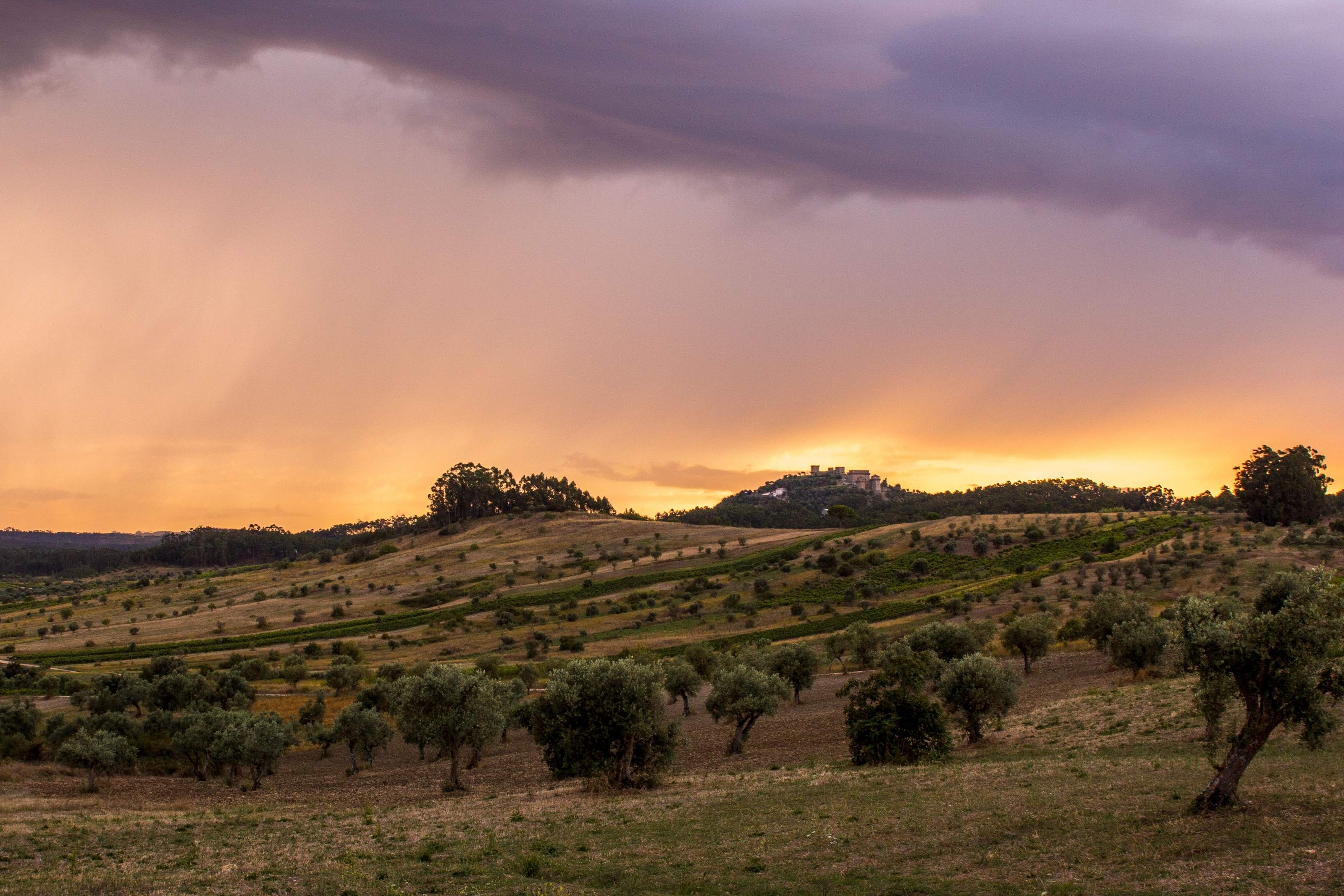
Portugal ranks first because it scores acceptably on all three axes at once, rather than winning one and failing another. Interior Alentejo land runs roughly €7,000–11,000 a hectare, DGEG’s single national portal (SERUP) keeps registration in one place rather than scattered across regional offices, and December still delivers real solar production. The region also put itself on the off-grid map on purpose — Tamera, the intentional community near Colos, has run water-retention and off-grid demonstration projects since the 1990s, leaving local councils genuinely used to unconventional builds, not just tolerant of them.
Rural Extremadura and inland Andalucía are cheaper again and just as sunny, but carry a real trap: empadronamiento — registering your address at the town hall — isn’t the same as your house being legally habitable, and plenty of self-builds on suelo rústico never get a full cédula de habitabilidad. Andalucía’s workaround is a real legal status, not a loophole: AFO (Asimilado a Fuera de Ordenación) lets a rural building that’s outlasted the demolition statute of limitations connect water and power without ever becoming fully “legal.” Buy expecting AFO, not a normal deed, and the risk is priced in. Southern Italy is cheaper still — depopulated comuni in Calabria, Molise and Sicily auction abandoned houses for a symbolic €1 with a renovation deadline attached, and bare hillside land often sells under €5,000/ha — but confirm the zona sismica first: most of the south sits in Italy’s highest seismic-risk bands, adding engineering cost a cheap deed won’t show you.
Cheapest Land: Romania and Bulgaria
Any European Union citizen can buy agricultural land in either country outright — the transitional restrictions that once blocked foreign ownership expired years ago — and the land is the cheapest in Europe by any measure. The catch in both is Germany’s shape, just far more navigable: land is zoned, and building on the wrong zone means reclassifying it first. Romania splits every parcel into intravilan (inside a locality’s built boundary, where a normal permit applies) and extravilan (outside it, usually agricultural); moving a plot between them runs through a PUZ (zonal urban plan) — realistically six months to two years, a few thousand euros in fees, and a cooperative mayor’s office. Bulgaria requires its own change-of-designation step first, and lower-grade land converts far more easily than prime cropland. Neither is a formality you can skip, but both are a known process with a known price — not Germany’s closed door.
The Wet West: France, Ireland, Scotland
France makes you use the front door, and it’s worth knowing why that door used to feel optional: cabanisation — informal cabins and mobile homes on land zoned agricultural or natural — spread for decades across Occitanie, and French authorities are now actively demolishing the unauthorized ones instead of looking away. Do it properly: anything over roughly 20m² needs a full permis de construire, smaller structures a lighter déclaration préalable, and interior land away from vineyard country — Ariège, Lozère, the Massif Central — runs a few thousand euros a hectare on SAFER’s regional data. Strict, but predictable — the opposite trade from cabanisation’s cheap-until-it-isn’t risk.
Ireland has a long history of allowing one-off rural houses most of Europe would refuse — but that’s tightening, county by county, into “local needs” tests favoring applicants with a proven local connection over newcomers, and land isn’t cheap in a small, productive country. Scotland flips the trade: a croft — a small regulated tenancy under the Crofting Commission, concentrated in the Highlands and Islands — can come with a house for well under £50,000, cheap precisely because crofting tenure (residency duties, subletting restrictions) scares off conventional buyers. You still need council planning permission on top of crofting law, and since Brexit, Scotland sits outside the European Union entirely — a different immigration question, not just a different building code, for any non-UK European Union citizen.
The Nordic Paradox: Sweden and Finland
Ranked together because the law and climate are nearly identical in both. Allemansrätten in Sweden and jokamiehenoikeus in Finland give anyone the right to walk, forage and camp temporarily on almost any land — the single most misunderstood fact in off-grid Europe: it’s a right to roam, not to build. A permanent structure still needs a bygglov (Sweden) or rakennuslupa (Finland), and building outside a detailed plan means applying first for a preliminary ruling — a förhandsbesked, or in Finland a poikkeamislupa — confirming the site is suitable before you can even apply for the permit. The upside: once a municipality says yes, it’s rule-based rather than discretionary, and forest land in the sparsely populated north is genuinely among the cheapest by area in Western Europe. The cost doesn’t show up on a deed: December solar yield collapses toward zero for six to eight weeks up here, which is why every serious system runs on wind and wood first, with solar as a summer bonus, not the backbone.
How to Vet Any Country Before You Buy
The nine destinations above cover most of where Europeans actually go, but the method matters more than the list — use it on anywhere not covered here too.
- Ask for the zone, not the deed. “You own the land” and “you may build a house on it” are separate legal facts everywhere in Europe. Get the zoning classification in writing before you sign anything — Außenbereich, extravilan, suelo rústico, zone agricole: the same question in a different language.
- Find out what “already built” is worth. Several of these countries treat an existing structure completely differently from raw land — Germany’s barn-conversion exception, Italy’s €1 houses, Andalucía’s AFO status. Buying something already standing is consistently the shortest legal path here.
- Get December numbers, not July ones. A brochure’s “300 days of sunshine a year” hides the one month that actually sizes your battery bank. Pull real solar-resource data for the site’s coordinates before committing to a system design.
- Screen the parcel before a surveyor has your deposit. Water rights, flood and fire-risk zoning, and access easements sink more purchases than planning law does. A siting tool like cleanz.one checks exactly that layer — land and clean-area data across Europe — before you’re legally committed. Still weighing which country fits your own priorities? The Relocation Matchmaker scores sun, water, budget and quiet against this list for you.
Is it actually illegal to build off-grid in Germany?
Not everywhere — inside a development plan or built-up area, a normal Baugenehmigung applies like anywhere else. It’s specifically the open countryside (Außenbereich) that §35 BauGB keeps closed to ordinary residential building — exactly the land most off-grid buyers want. Converting an existing agricultural building, or holding a genuine working farm, are the real exceptions.
Which of these nine is easiest for a non-European Union buyer?
Land ownership and residency are separate questions. Romania, Bulgaria, Portugal, Spain, Italy and France all allow non-European Union nationals to buy land, sometimes with an extra approval step; living there long-term runs through a country-specific visa route worth verifying fresh rather than trusting a blog post. Scotland, outside the European Union since Brexit, runs an entirely separate UK immigration system regardless of crofting law.
Does cheap land mean a fast build?
Usually the opposite. The cheapest land here — Bulgaria, Romania, remote Nordic forest — is cheap partly because it needs a rezoning or permit step first, and that takes months to years. Portugal and the rule-based Nordic systems tend to move faster precisely because the process, once you’re in it, is well-defined rather than discretionary.
Why rank by December solar instead of the annual average?
Because an off-grid system has to survive its worst month, not its best one. A great annual average with a brutal December either needs a much larger, pricier array and battery bank, or a genuine second source — wind, wood, hydro — to carry the gap. Sizing off the annual number is the single most common reason self-designed off-grid systems fall short their first winter.