


Somewhere on a kitchen table right now is a quote for $40,000. It has a solar array, a battery bank, an inverter, and a signature line. It does not have a number for the 200 feet of copper between the array on the ridge and the breaker panel in the house. It does not have a number for the electrical permit the county requires even though the property will never touch the grid. And it does not mention that the battery bank, warrantied for "up to 6,000 cycles," will be visibly weaker by year nine — on a system sold as a 25-year asset.
Installers aren't hiding these costs. They're just not solar-scope, so they don't appear on a solar quote — and by the time most buyers find them, they've already signed. Below are seven of the most common budget-busters in a real off-grid build, with 2026 numbers for both sides of the Atlantic. None of them are exotic. All of them are avoidable, if you know to ask before the trencher shows up instead of after.
Key number
A $40,000 quote for panels, battery and inverter is usually just that: panels, battery and inverter. Layer in the seven costs below at typical rural rates and the real project total lands around $53,000–$72,000 — 32% to 80% over the number on the contract.
What's Actually Inside a $40k Quote (and What Isn't)
Most base quotes price three things well: the modules, the battery bank at day-one capacity, and the inverter/charge-controller stack. Roughly, that's 35% panels, 35–40% battery, 15% inverter and controls, and the remainder a "standard" balance-of-system allowance — which quietly assumes a short wire run, a driveway-adjacent mounting site, and one truck roll. That baseline is honestly priced. It's also a best-case site.
Off-grid buyers are disproportionately not best-case sites — that's usually the whole reason they're off-grid to begin with. The property is remote, sloped, wooded, or simply too far from a pole for a grid extension to pencil out. Every one of those traits is exactly what turns the seven line items below from footnotes into real money.
The 7 Costs That Aren't on the Solar Quote
Here's where a base $40k quote typically grows, ranked roughly by how often each one gets missed:
| Hidden cost | Typical add-on (2026) | Why it's missing from the quote |
|---|---|---|
| Wiring, conduit & trenching | $1,500–$4,000 | Priced for a short, easy run — not your actual distance |
| Permits, inspection & sign-off | $400–$1,800 | Marked "by owner" in the fine print |
| Battery replacement reserve | $4,000–$7,000 | Quoted at day-one capacity, not 25-year system life |
| Backup generator & transfer switch | $3,500–$8,500 | Sold as solar-only scope |
| Mounting/racking terrain premium | $900–$3,200 | Racking is priced for flat, easy ground |
| Freight, hazmat & last-mile delivery | $450–$1,600 | Batteries ship as hazmat; rural delivery isn't free |
| Off-grid labor premium | $2,200–$6,000 | Rural mobilization and specialist rates |
| Typical total | $12,950–$32,100 | 32%–80% over a $40k base quote |
1. Wiring, Conduit & Trenching
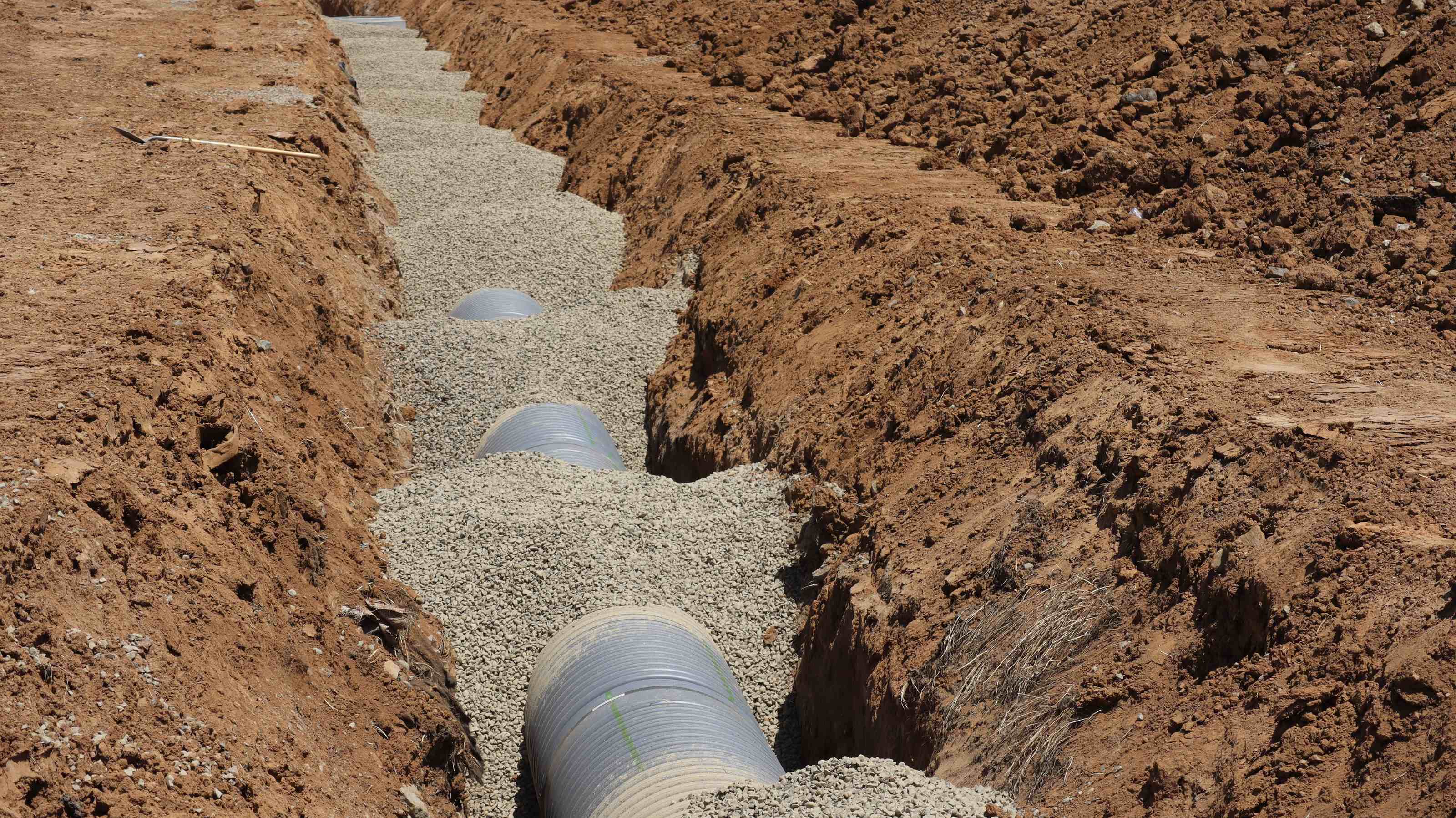
The base quote assumes the array sits near the battery shed — a 30–50 foot run, maybe less. Off-grid arrays rarely cooperate: the best sun is on a south-facing ridge, the house is tucked into the trees for wind protection, and now there's 150–300 feet between the two. At 2026 copper prices, heavy-gauge cable sized to keep voltage drop under 3% at that distance runs $6–$12 a foot in materials alone. A 200-foot run eats $1,200–$2,400 in wire before conduit, trenching (professionally, $8–$15 a linear foot; a rented trencher and a weekend, closer to $150–$300 if the ground cooperates) or the extra combiner boxes a long run often needs.
2. Permits, Inspection & the Credit That Isn't There Anymore
Off-grid doesn't mean unregulated. In the US, most counties still require an electrical permit and inspection for the battery/inverter installation even with zero utility interconnection — typically $150–$800, though a growing number of jurisdictions charge a percentage of declared system value, which can push it past $1,500 on a $40k job. And here's the one that catches buyers out specifically in 2026: the 30% federal residential solar tax credit that off-grid households had budgeted against for a decade ended for good on December 31, 2025. A direct-purchase system installed in 2026 gets no federal credit at all — the one remaining path runs through third-party-owned lease or PPA structures, which mostly don't fit a true off-grid build.
In Europe, the equivalent paperwork runs through installer certification rather than a tax credit: most member states require a licensed electrician's sign-off — Spain's boletín eléctrico, for instance — as a separate line from the hardware invoice. Several countries, Germany among them, apply 0% or reduced VAT to qualifying residential solar and battery hardware, which is real money back without a US-style credit application, and one reason European quotes can look deceptively close to the US number despite pricier freight.
3. The Battery Replacement Reserve
Panels carry a 25-year performance warranty. LiFePO4 battery banks don't get the same number, and the gap is where budgets quietly break. A well-managed bank still loses meaningful capacity by year 8–12 — enough that most real off-grid households top up or replace cells rather than run derated through a winter. At 2026 pack prices (roughly $120–$280/kWh for cells, more like $200–$350/kWh landed and integrated into an existing system), a 20kWh bank's replacement reserve runs $4,000–$7,000. A $40k quote priced for day-one capacity and silent on year ten isn't dishonest — it's just not answering a question most buyers don't know to ask.
4. Backup Generator & Transfer Switch
"Off-grid" gets sold as "never think about power again." In any climate with a real winter or a run of cloudy weeks, that promise only holds if the array and battery are oversized to cover the single worst week of the year — which roughly doubles up-front battery cost to buy autonomy used a handful of days a season. Almost every honestly designed off-grid system instead pairs a right-sized solar array with a propane or dual-fuel backup generator, automatic transfer switch, and fuel storage: $3,500–$8,500 installed, and it is very rarely inside a solar installer's quoted scope, because it isn't solar.
5. Mounting & Racking on Real Terrain
Rack pricing — typically $0.15–$0.35 a watt — assumes a flat roof or flat, diggable ground. Off-grid sites are disproportionately neither: slope, exposed rock that needs augering or helical piles instead of poured footings, or wind/snow loads that trigger an engineering stamp ($800–$2,500 for the signature alone in many US counties). That terrain premium adds $900–$3,200 on top of baseline racking costs, and it's the line most likely to have been estimated from a satellite photo rather than an actual site visit.
6. Freight, Hazmat Fees & the Last Mile
Lithium batteries ship under hazmat rules, which means a carrier surcharge before the pallet even leaves the warehouse. Then it has to actually reach the site — and "reach the site" is doing a lot of work when the property that qualified for off-grid living is, by definition, far from a freight depot. Liftgate and residential-delivery fees plus rural surcharges typically add $450–$1,600 in the US. In Europe, ordering hardware across a border stacks VAT-inclusive freight and customs handling on top, which is one reason European brand and freight costs swing more by country than US costs swing by state. Sourcing regionally instead of importing an out-of-region kit usually beats the freight line by more than it costs in brand premium — worth checking against current hardware offers before you order:
7. The Off-Grid Labor Premium
A suburban solar crew quotes a job assuming one truck roll, one parked driveway, a two-day install. Off-grid work rarely runs that clean: a design trip, a staging trip, and a return commissioning trip once the battery arrives on its own freight schedule — plus drive time billed portal-to-portal on a property that might be ninety minutes from the nearest crew. Specialist off-grid electricians also simply charge more per hour; there are fewer of them and the work is harder, often 20–40% over standard residential solar rates. Across a real project this is frequently the single largest item on this list: $2,200–$6,000, and the one buyers are least likely to have priced in, because it isn't a part number — it's a pattern in how the job actually runs.
The Fast Way to Budget This Before You Sign
You don't need seven separate estimates to get within range of the real number. Take the base hardware quote and apply a site multiplier: 1.35× for a favorable site — array within 50 feet of the battery shed, flat ground, paved road access, permits already scoped. 1.6× for a typical rural site — moderate distance, some slope, a county that requires inspection. 1.8×+ for a genuinely hard site — steep or rocky ground, a quarter-mile of wire, no road access for delivery trucks. A $40,000 hardware quote on a typical rural site should be budgeted at roughly $64,000 before anyone signs anything — not because the installer is wrong, but because the quote only ever answered "what does the hardware cost," not "what does the project cost." Don't have a hardware number yet? The off-grid solar sizing calculator turns your actual loads into one before you apply any multiplier.
Members only · free account
The full line-item cost report
Every number above, broken out by system size (5kW/10kWh through 15kW/40kWh), US region and European country, plus the underlying assumptions so you can pressure-test a real quote against it before you sign.
Does a $40,000 off-grid solar quote include the battery bank?
Usually yes, at day-one capacity — but check whether it's priced as a 25-year asset or a day-one number. Almost none price in the mid-life top-up or replacement a real battery bank needs by year 8–12, which is the single biggest hidden cost on this list.
Can I cut the off-grid labor premium by doing some of the work myself?
Often, yes. Trenching, clearing the mounting site and staging materials are common owner tasks a crew will happily take off the invoice. Final electrical connections and battery/inverter commissioning are the parts most jurisdictions require a licensed electrician to sign off on, on both sides of the Atlantic.
Is off-grid solar still worth it in the US without the 30% tax credit?
The payback math is slower without it, but for a genuinely off-grid property the comparison was never really "solar vs. free" — it was solar vs. a utility line extension that can run tens of thousands of dollars a mile, or a property that simply isn't buildable without on-site power. That comparison hasn't changed; only the discount has.
Why do European quotes sometimes look cheaper for the same system size?
Partly VAT treatment — several European countries zero-rate or reduce VAT on qualifying residential solar and battery hardware — and partly that 230V/50Hz off-grid components are more standardized across the continent, which keeps freight and inverter costs lower than importing a US-spec 120/240V split-phase kit.
None of these seven costs are a reason to skip off-grid solar. They're a reason to get a real number before you sign one that only covers the hardware.