


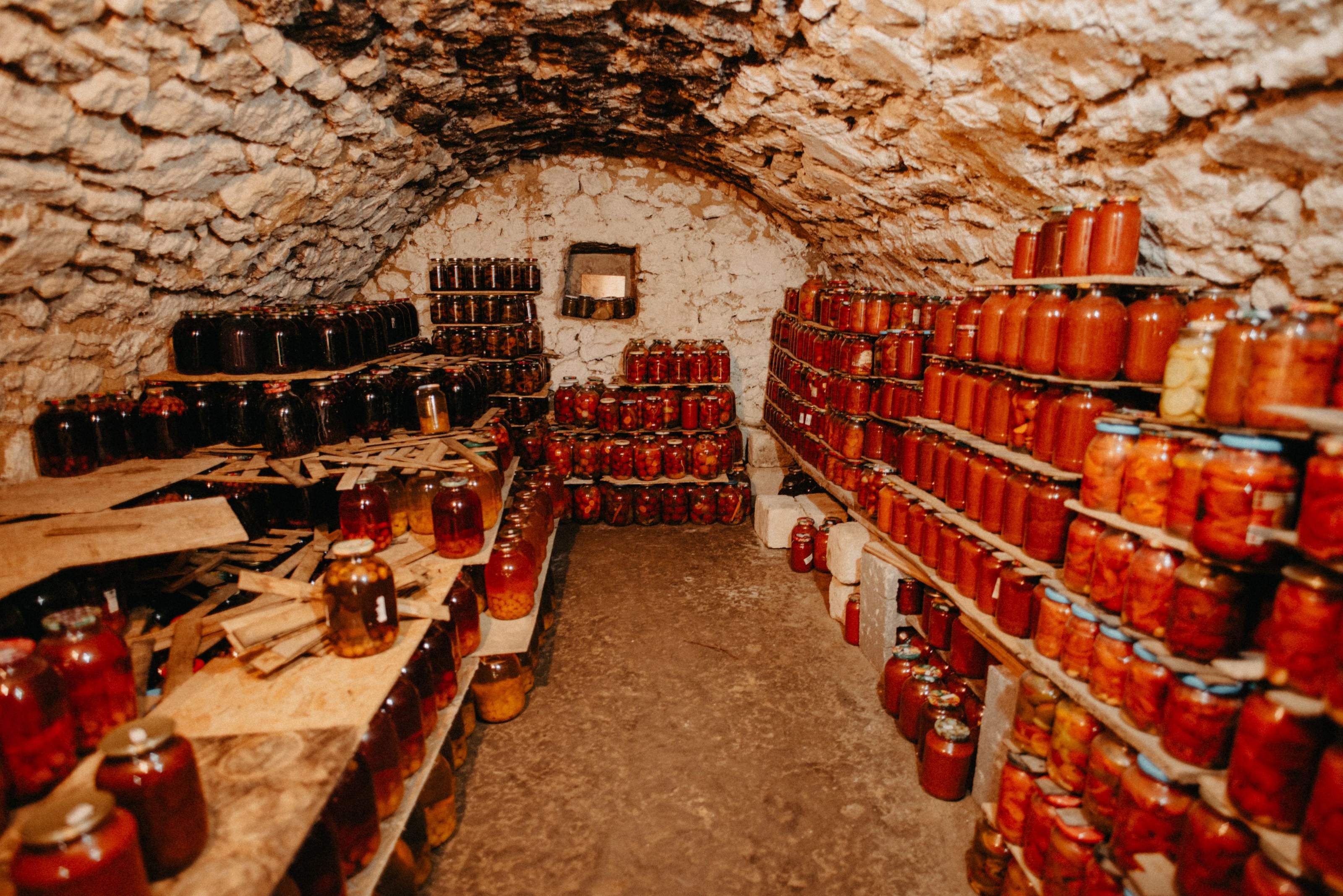
A root cellar costs nothing. A pressure canner costs $150. A Harvest Right freeze dryer costs $2,695 and up before you've dried a single potato. Stop the comparison there and freeze-drying looks like the worst deal in home food preservation — and on a straight cost-per-calorie basis, it is. Run 100 pounds of potatoes through all three methods and freeze-drying comes out roughly 40 times more expensive per calorie than the root cellar. That is not a rounding error.
It's also not the whole story. Cost-per-calorie only asks how many calories you banked for how much money. It never asks how long those calories stay good. A root-cellared potato is essentially free — and it's compost by April. A freeze-dried potato costs three times more than a canned one to put on the shelf — and it's still fine to eat two decades from now. Price preservation as cost per calorie per year of shelf life instead of cost per calorie alone, and the ranking flips. Here's the full math, run on one real harvest, so you can run it on your own before you spend a dollar on any of the three.
Key number
Freeze-drying costs roughly 40× more per calorie than root cellaring on the same harvest — but priced per calorie per year of shelf life, it's the cheapest of the three. Shelf life, not the sticker price, is what a $2,695 freeze dryer is actually buying.
What Each Method Actually Costs to Run
Every preservation method has the same three cost buckets: what you pay once for equipment, what you pay per batch for energy and consumables, and what you lose to spoilage or processing before the food is edible again. The three methods split those costs almost oppositely.
| Method | Typical upfront cost | Energy per batch | Calories retained | Typical shelf life |
|---|---|---|---|---|
| Root cellar | $0–$600 (often existing space) | None — passive cooling | ~80–90% | 2–8 months, crop-dependent |
| Water-bath / pressure canning | $100–$400 (canner + starter jars) | ~2–4 kWh ($0.35–$0.70 US) | ~75–85% | 12–18 months at best quality |
| Freeze-drying | $2,695–$4,495+ (small–large Harvest Right) | ~15–35 kWh ($2–$8 US) | ~95–99% | 15–25 years, food-dependent |
Root cellaring wins the "calories retained" column on paper only because there's no processing step to lose anything to — the loss it does take is spread out as slow shrinkage and sprouting over the storage season instead of happening all at once. Canning loses the most up front, mostly to peeling and trimming before the jar, not to the heat itself. Freeze-drying loses almost nothing, which is exactly what you'd expect from a process that removes water by sublimation instead of by cooking.
The 100-Pound Test: Same Harvest, Three Methods
Ranges are useful for shopping; they're useless for deciding. So here's one worked example, run the same way on all three methods: 100 lbs of home-grown potatoes, at roughly 350 kcal per raw pound — a 35,000-kcal harvest. Figures below are US-priced for a clean single-currency example; the assumptions are stated so you can re-run them in euros.
Root cellar
Stored whole and unpeeled in a bin at 35–40°F and high humidity, no equipment beyond $50 of bins and straw insulation, amortized across many seasons to almost nothing for this one harvest. Typical shrinkage and sprout loss over a 5-month storage season: ~12%, leaving 30,800 kcal retained for an all-in cost of about $5.
Pressure canning
Peeling and trimming loses about 15% of the raw weight before anything hits a jar; pressure processing and the liquid left in the jar cost roughly another 11% of what remains. That's 48 quart jars from the trimmed potato, at about $1.15 all-in per jar — a reusable jar amortized over its many-year life, a new lid (the one truly consumable part), a slice of the $150 canner's cost, and a few cents of stovetop energy per jar (a full canner-load run costs closer to a quarter than a dime, but it processes several jars at once). Total: about $55 for 26,500 kcal retained.
Freeze-drying
Same 15% trim loss up front, then almost nothing more — call it 2–3% — lost to the drying process itself. A mid-size (5-tray) Harvest Right handles roughly 8 lbs of trimmed potato per batch, so this harvest takes about 11 batches. Amortize the $3,195 medium unit over a realistic 300-batch working life (an 8–10 year machine run at a serious homesteader's pace, roughly three batches a week through harvest season plus off-season use) and equipment costs about $10.65 a batch; add ~$4 of electricity and ~$1.35 of Mylar and oxygen absorbers, and total cost lands around $180 for 29,000 kcal retained.
| Method | All-in cost (100 lbs) | Calories banked | Cost / 1,000 kcal | Cost / 1,000 kcal / year |
|---|---|---|---|---|
| Root cellar | $5 | 30,800 | $0.15 | $0.38 (5-month shelf life) |
| Pressure canning | $55 | 26,500 | $2.10 | $1.40 (18-month shelf life) |
| Freeze-drying | $180 | 29,000 | $6.20 | $0.31 (20-year shelf life) |
Read the fourth column and the story reverses. Divide cost-per-1,000-kcal by the method's shelf life in years and you get the cost to keep 1,000 calories edible for a year — a fairer comparison between a potato you must eat by March and a pouch that's still good the year your mortgage is paid off. Freeze-drying's 20-year window (15–25 depending on fat content: dry vegetables and grains toward the high end, meat and dairy toward the low end from fat oxidation) beats even a free root cellar on that basis, and it isn't close on canning.
The Volume Problem Nobody Mentions at the Sales Pitch
That $6.20-per-1,000-kcal freeze-drying number assumes you actually run the machine 300 times over its life. Most of a freeze dryer's cost-per-calorie is the machine itself, amortized — which means the number is almost entirely a function of how many batches you'll realistically run, not of the food or the drying process:
| Lifetime batches run | Cost per 1,000 kcal |
|---|---|
| 10 (bought it, ran it a dozen times) | ~$125 |
| 50 | ~$26 |
| 150 | ~$10 |
| 300 — steady homestead pace over 8–10 years | ~$6 |
| 600 (heavy, year-round use) | ~$4 |
Canning and root cellaring don't move much on this axis — their equipment is cheap enough that amortization is a rounding error next to the consumables. Freeze-drying is the opposite: the machine is the cost. On a crop like potatoes that canning or cellaring already handles well, freeze-drying essentially never catches up on raw cost-per-calorie, even at heavy lifetime use — and that's the honest answer, not a sales pitch. What it buys instead is the calorie-year economics above, plus the ability to preserve things the other two structurally cannot touch at all.
Whether you're pricing a first freeze dryer against a realistic batch count or just restocking jars and lids for the season, current offers on both live here:
What Each Method Can't Do — the Real Decision
Root cellars are crop- and climate-limited. They're excellent for potatoes, apples, cabbage, winter squash, beets and carrots in sand — and useless for dairy, eggs, cooked meals, or most fruit past a few months. They also need a genuinely cool season or engineered coolth to hit 32–40°F; a Gulf Coast or southern-Mediterranean climate can approximate it with an insulated buried container or a consistently cool garage corner, but only for weeks, not a full winter.
Canning has hard safety rules, not just cost ones. Low-acid vegetables and all meats require pressure canning, not water-bath, and processing times shift with jar size and altitude — get it wrong and the risk isn't spoiled food, it's botulism. In the US, jar and lid systems mean Ball or Kerr two-piece lids; in Europe, Weck and Le Parfait dominate with glass-lid-and-rubber-ring or clip systems instead, and pressure canning of low-acid vegetables is culturally less common than water-bath preserving and root cellaring (a genuine Wurzelkeller or Nordic root cellar tradition) — worth knowing before you assume US recipes and times translate directly.
Freeze-drying is the most expensive door in and the most restrictive on fat. High-fat foods (peanut butter, fatty cuts, mayonnaise-based dishes) oxidize faster even freeze-dried and need vacuum-sealing and cool storage to hit anywhere near 20 years. It's also genuinely more expensive to run in Europe: US electricity for this comparison runs roughly $0.12–$0.16/kWh, while European residential rates commonly land nearer €0.28–€0.40/kWh depending on country — call it double, which pushes a European freeze-dryer's per-batch energy cost up proportionally more than it moves canning's (already-small) energy line, and doesn't touch a root cellar's cost at all.
Which One Should You Actually Buy
- Growing your own potatoes, apples, winter squash or root vegetables? Cellar them first. Nothing beats free, and these are exactly the crops a cellar is built for.
- Putting up a garden's worth of tomatoes, beans or stone fruit for the year ahead? Canning wins on cost per calorie and needs no ongoing power once you own the gear.
- Building a reserve meant to last a decade or more, or preserving meat, dairy, eggs or full cooked meals? That's freeze-drying's actual job — the other two structurally can't do it, at any price.
Preserved calories still lean on your water system — canning brine and rehydrating freeze-dried meals both draw from the same tank, so size that alongside the pantry with how much water storage you actually need. For vetted gear and installers across all three methods, see the food preservation solutions hub.
Which food preservation method is cheapest overall?
Root cellaring, by a wide margin, for the narrow list of crops it works on — potatoes, apples, cabbage, winter squash and other root vegetables. It costs close to nothing per calorie because there's no equipment to amortize and no energy input. The catch is shelf life: most cellared crops are done in 2–6 months, so "cheap" only holds if you actually eat through the harvest before it turns.
Is a Harvest Right freeze dryer worth it for a small household?
Only if you'll run it often enough to amortize the machine. The math above shows cost per 1,000 kcal dropping from over $100 at ten lifetime batches to around $6 at a realistic 300-batch, 8–10 year working life. A household running one weekly through harvest season, then using it off-season for meat, dairy and meals, gets there. One that runs it a dozen times and shelves it does not.
Does canning or freeze-drying destroy more nutrients and calories?
Freeze-drying keeps more of what you started with by a wide margin — it uses no real heat, just vacuum and cold, so processing loss is typically in the low single digits. Canning's heat and the liquid left behind in the jar cost more, though less than most people assume; in both methods, the larger calorie loss usually happens at the peeling and trimming stage, before the food ever reaches the jar or the tray.
Can you root-cellar food without a cold winter or a basement?
Not the way a true cellar is built, but insulated buried containers, unheated exterior closets and a consistently cool garage corner can approximate 40–50°F for weeks to a couple of months, if not a full winter. In a climate that never reliably drops into the mid-50s, canning or freeze-drying make more sense as your primary method, with cellaring as a short-term bonus.
Members only · free account
The calorie-per-dollar cheat sheet, 15 crops
The same cost-per-1,000-kcal and cost-per-1,000-kcal-per-year math above, run on apples, tomatoes, green beans, venison, eggs, dairy and eight more crops and cuts — plus a worksheet to find the breakeven batch count for your own freeze dryer size.
Keep reading
- Gravity, RO, or UV: What Actually Makes Off-Grid Water Safe to Drink — canning and rehydrating dried food both depend on safe water.
- Well, Spring, or Rain Catchment? How to Choose Your Off-Grid Water Source — a reliable water source underpins every preservation method here.
- The Off-Grid Load Audit: The Phantom Load That Drained a $9k Bank Overnight — a freezer or freeze-dryer is a serious load; put a number on it.