


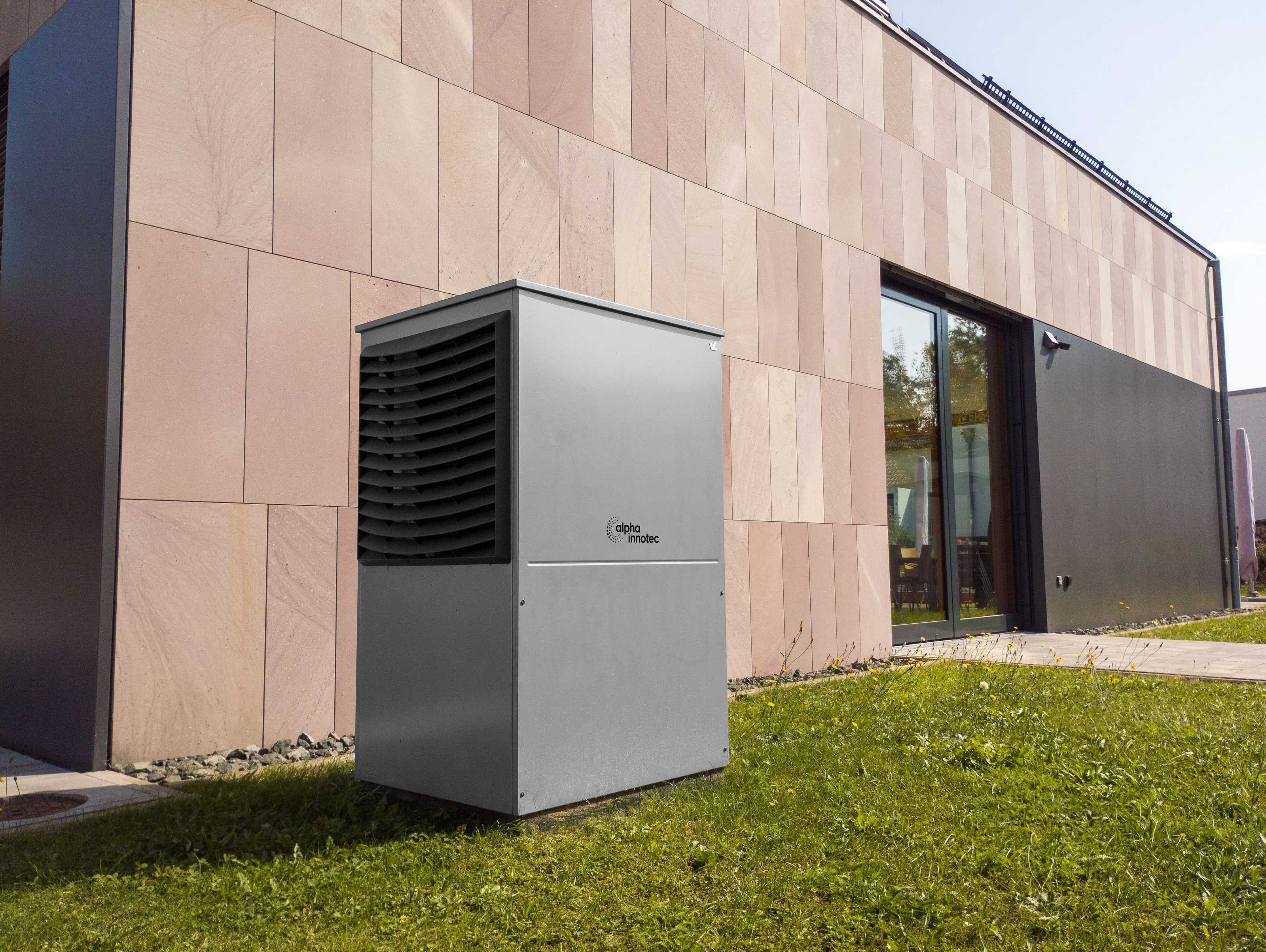
Ask an off-grid forum whether a mini-split can run on solar and you'll get two confident, opposite answers. Both are right — just for different months. Run one in cooling mode on a bright afternoon and it barely dents an average system; the panels are practically feeding it live. Run the same unit in heating mode on the coldest, darkest night of the year, and it can pull more power in a day than the rest of an off-grid home uses for everything else combined. Same nameplate, same box, two entirely different loads. Below is the actual watt-hour math for both cases — running watts by outdoor temperature, the startup surge nobody needs to fear, and what a real solar-plus-battery bank can and can't cover — so you can find out which version of the story is yours.
Why the Same Appliance Is Easy in July and Brutal in January
A heat pump moves heat rather than generating it, and how hard it has to work depends entirely on how big a temperature gap it's bridging. In cooling mode on a 95°F (35°C) afternoon, that gap is modest, the unit sips power relative to its output, and — this is the part that matters for solar — peak cooling demand and peak solar production land at almost the same hour of the same day. The sun that makes the room hot is the same sun charging the battery that cools it back down.
Heating flips both halves of that equation. The colder it gets outside, the bigger the gap the heat pump has to bridge, and its efficiency (COP — the ratio of heat delivered to electricity consumed) falls as the gap grows. At the exact same time, winter days are shorter, the sun sits lower in the sky, and cloud cover is more common at high latitudes. The load goes up right as the supply goes down. That anti-correlation, not the unit's spec sheet, is the real reason "can my solar run a mini-split" doesn't have one answer.
The one-line rule
Cooling load and solar output rise and fall together. Heating load and solar output move in opposite directions. Everything below is what that costs in real watt-hours.
What a 9–12k BTU Inverter Mini-Split Actually Draws
Modern mini-splits are inverter-driven: the compressor modulates its speed to match demand instead of just switching fully on or off, so the wattage a spec sheet lists is really a range, not a number. The table below uses a common 12,000 BTU (1-ton) cold-climate-rated unit running near its full 3.5 kW of thermal output at each condition — a realistic worst case for sizing, since a cold-climate unit is chosen specifically to keep delivering that output as it gets colder.
| Condition | Mode | Efficiency (COP) | Running watts |
|---|---|---|---|
| 95°F / 35°C outdoor | Cooling | ~3.5 (EER ~12) | ~1,000W |
| 47°F / 8°C outdoor | Heating | ~3.8 | ~920W |
| 17°F / −8°C outdoor | Heating | ~2.6 | ~1,350W |
| 5°F / −15°C outdoor (design day) | Heating | ~2.2 | ~1,600W |
A 9,000 BTU unit scales down roughly proportionally — figure 70–75% of the watts at each row. A standard (non-cold-climate) inverter unit doesn't necessarily draw less at 5°F — it typically just can't hold its rated output there, delivering 50–70% of the BTU for similar watts. Either way, cold weather is where a mini-split gets expensive to run — the only question is whether you get less heat for the money or the same heat at a higher draw.
The Startup Surge Is Smaller Than the Folklore
Old single-speed compressors and window-unit ACs are the reason "heat pumps need a huge inverter" became conventional wisdom off-grid: their locked-rotor startup current can spike 3–5× running watts for a fraction of a second, hard enough to dim lights or trip an undersized inverter. Inverter-driven mini-splits don't do that. The compressor ramps up over a second or two via a variable-frequency drive, so the surge is typically only 1.3–2× running watts — a 920W unit might briefly touch 1,500–1,800W on a cold start, not 4,000W+. It's rarely the mini-split that determines an off-grid inverter's surge rating; a well pump or a shop tool usually asks for more. Worth confirming against your actual inverter spec in off-grid inverter and charger sizing regardless.
The Real Daily Watt-Hour Budget, Worked
Running watts only tell you the ceiling. What actually drains a battery bank is running watts × how much of the day the compressor spends working — its duty cycle. Here's a full day's energy budget for that same 12,000 BTU unit, heating one well-insulated ~500 sq ft off-grid room or small cabin, across three real weather bands:
| Scenario | Outdoor temp | Duty cycle | Avg. draw | Energy, 24h |
|---|---|---|---|---|
| Shoulder-season day | ~45°F / 7°C | ~15% | ~140W | ~3.4 kWh |
| Cold winter day/night | ~17°F / −8°C | ~50% | ~675W | ~16.2 kWh |
| Design-day cold snap | ~5°F / −15°C | ~90%* | ~1,440W | ~34.6 kWh |
*Includes periodic defrost cycles, where the unit briefly reverses to clear frost off the outdoor coil — a real, if modest, add to cold-weather energy use that most back-of-envelope estimates skip.
Key number
On the coldest night of the year, one small room's heat pump can burn more electricity in a day than a typical off-grid home budgets for the fridge, well pump, lighting, laundry and electronics combined. That's the number that catches people out — not the running watts on the spec sheet, but the hours it has to keep running to hold the room at temperature.
Running the Numbers Against an Actual Solar-Plus-Battery Bank
Put both weather extremes against a real system and the gap becomes obvious. Use the standard off-grid formula — array (kW) = daily kWh ÷ (peak sun-hours × 0.75 derate) — on each case:
Cooling day, high-sun climate (~7.0 peak sun-hours, e.g. a Southwest-US or inland-Mediterranean summer): the ~8.4 kWh cooling load (~1,000W running draw at a ~35% duty cycle × 24h ≈ 8.4 kWh) needs roughly a 1.6 kW array share — a rounding error against a typical off-grid array, and one that's produced in real time as the day heats up. Battery barely notices.
Heating design-day, low-sun winter climate (~1.2 peak sun-hours on a short, overcast December day — realistic for a Pacific-Northwest or Northern-European site): a 4 kW array produces about 3.6 kWh that day. Against the 34.6 kWh load above, that's a shortfall of roughly 31 kWh — the panels are covering a little over one-tenth of what the room needs, and every other watt has to come from storage already charged on a sunnier day, or from a generator.
| Design-day heating load | |
|---|---|
| Heat pump energy needed | 34.6 kWh |
| 4 kW array output (1.2 PSH day) | 3.6 kWh |
| Shortfall from array alone | 31.0 kWh |
| Usable battery (2× 48V/100Ah LiFePO4, ~90% DoD) | ~9.2 kWh |
| Hours a full battery covers this load alone | ~6.4 hrs |
A fully charged 10 kWh-class battery bank — a very normal size for an off-grid cabin — runs out in about six and a half hours with the heat pump as its only load, before the fridge, pump or lights take their share, and before a second cold, cloudy day in the same stretch even enters the picture. That's not a reason to rule out heat-pump heating off-grid — it's the reason "size the array and battery for the average day" is the single most common off-grid heating mistake. Design days aren't average days, and they're exactly when solar contributes least. For the fuller battery math, see sizing an off-grid battery bank.
Run this against your own site, insulation and unit size →
Closing the Gap: Three Real Options
- Oversize the array and battery for the heating season, not the annual average — the same worst-month logic that governs any off-grid sizing, just with a much hungrier appliance driving it.
- Keep a non-electric backup for the coldest 10–20% of days — propane, wood, or a backup generator — and let the heat pump carry the mild-to-moderate majority of the season, where its COP is still doing real work.
- Plan generator runtime deliberately for design-day stretches rather than treating every generator start as a system failure — a few hours a week in the worst month is a normal, budgeted part of most successful off-grid heat-pump installs, not a sign of undersizing.
Most working off-grid heat-pump systems use some blend of the first two. Pure array-and-battery sizing for a true design-day cold snap gets expensive fast; a small non-electric backup for the worst week is almost always the cheaper system overall.
Voltage, Brands and What to Actually Buy
Everything above is physics — it reads the same wherever the unit is installed. The hardware behind it doesn't. In the US, standard residential service is 120/240V split-phase, and DIY-friendly, pre-charged lineset kits like Mr. Cool's DIY series are the default self-install pick for an off-grid build. Across most of Europe, 230V single-phase is the household standard, and efficiency-leading brands like Daikin and Mitsubishi (many in cold-climate/Hyper-Heat trims) dominate the market, typically installed by a certified F-Gas engineer rather than self-installed. Neither changes a single number above — voltage is a wiring and breaker decision, not an energy-budget one. A few well-matched picks for an off-grid install, by region:
Mini-Splits on Solar: Frequently Asked Questions
Can a mini-split heat pump really run entirely off solar?
For cooling, almost everywhere — the load and the sun peak together. For heating, in a mild-winter, high-sun climate, usually yes with a normally-sized system. In a genuine cold-climate winter, running heating entirely off solar and battery through the worst week gets expensive; most real systems pair it with a small non-electric backup for that stretch rather than paying to size around it.
Do I need a bigger inverter for the compressor's startup surge?
Less than most people assume. Inverter-driven mini-splits soft-start over 1–2 seconds and typically surge only 1.3–2× their running watts, unlike old single-speed compressors or window units, which can spike 3–5×. A well pump or workshop motor is usually the bigger surge concern in the same system — check your inverter's actual surge rating rather than assuming the heat pump is the limiting factor.
Is a "cold-climate" or "Hyper-Heat" unit worth it off-grid?
For comfort and reliability, yes — it holds its rated output down to around 5°F (−15°C) or lower instead of falling off a cliff. But that comes with a catch worth budgeting for: it draws more watts in deep cold to keep delivering full heat, not fewer. "Efficient" and "low draw at the extreme" aren't the same claim — size the battery for the watts, not the marketing.
What's cheaper off-grid: heat-pump heat or a propane/wood backup for the coldest weeks?
For most sites, a hybrid beats either extreme. Let the mini-split carry the 80–90% of the heating season where its COP is still reasonable, and keep propane, wood or a generator in reserve for true design-day cold snaps. Sizing an entire array and battery bank to cover the worst night of the year outright is almost always the more expensive system.