


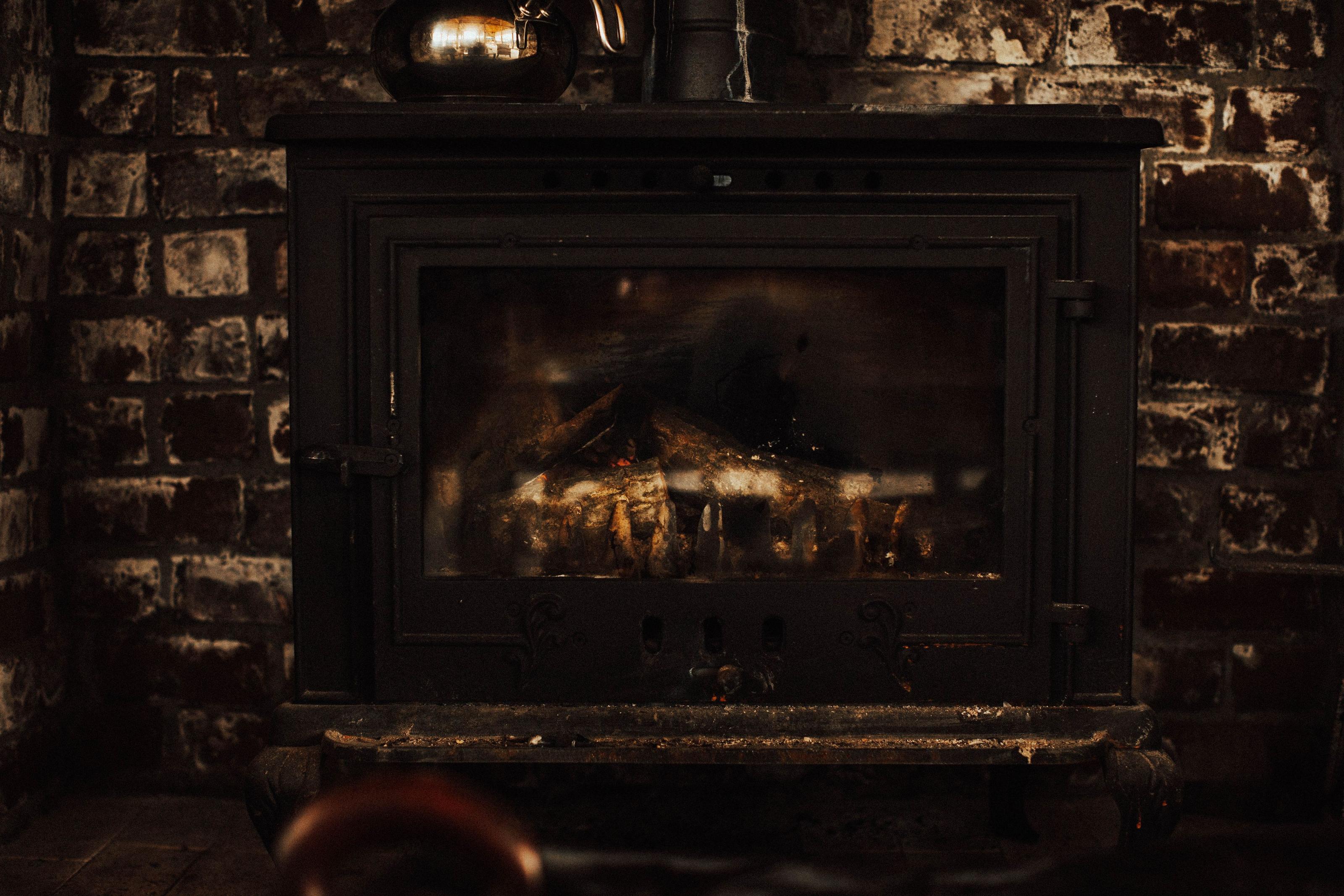
Look up which wood stoves are “Ecodesign compliant” and every manufacturer’s spec sheet says yes — because since 1 January 2022, none of them are legally allowed to say anything else. Regulation (EU) 2015/1185 didn’t create a premium tier of clean-burning stoves to opt into; it deleted the option to sell the dirty ones. The more useful question for anyone heating an off-grid cabin sits one layer down: among the stoves that clear the bar, which ones actually work with no socket to plug them into? The compliance plate hides a real trap for exactly this reader — the appliance sitting at the top of the efficiency scale is, for most off-grid buyers, the worst possible choice.
What Ecodesign 2022 Actually Regulates
“Ecodesign 2022” isn’t a certification a stove earns — it’s shorthand for a compliance date inside a much older piece of European law. Directive 2009/125/EC set up a framework letting Brussels write binding minimum-performance rules product by product for anything that uses energy. Commission Regulation (EU) 2015/1185 is the specific rule for solid fuel local space heaters — wood stoves, multi-fuel stoves and open fireplace inserts — and its full requirements became mandatory for anything newly placed on the European market from 1 January 2022. That’s why the industry calls it “Ecodesign 2022” despite the regulation dating to 2015: manufacturers had seven years’ notice, plus a looser first tier in 2018 before the real bar arrived.
A separate regulation, 2015/1189, covers solid fuel boilers — units that heat water for radiators or a cylinder rather than a room directly. Shopping for a wood-fired boiler instead of a stove, check 1189 instead; the numbers below don’t apply.
What the rule actually does is narrow: cap four combustion by-products, and floor how much of the wood’s energy comes out as usable heat instead of exhaust. It binds manufacturers and importers — whoever places a new appliance on the market — not homeowners, and says nothing about a stove already installed before the date. More below.
The Numbers on the Compliance Plate
Every closed-fronted wood stove sold new in Europe since 2022 has to clear five thresholds, tested to a harmonised standard (EN 16510, gradually replacing the older EN 13240) and measured at a reference 13% oxygen content in the flue gas — the standard way of normalising a reading so a smouldering, oxygen-starved fire can’t flatter the numbers by simply running rich.
| Closed-fronted log stove | Closed-fronted pellet stove | |
|---|---|---|
| Particulate matter (PM) | ≤40 mg/m³ | ≤20 mg/m³ |
| Carbon monoxide (CO) | ≤1,500 mg/m³ | ≤300 mg/m³ |
| Nitrogen oxides (NOx) | ≤200 mg/m³ | ≤200 mg/m³ |
| Organic gaseous compounds (OGC) | ≤120 mg/m³ | ≤60 mg/m³ |
| Seasonal efficiency floor (ηs) | ≥65% | ≥79% |
| Needs electricity to run | No, on almost all base models | Yes — auger, igniter and exhaust fan |
Open fireplaces and inserts — no door — are covered too, but at a much lower bar: 30% seasonal efficiency and a looser 50 mg/m³ particulate limit, reflecting how little control an open fire gives you over its own combustion air. For an off-grid home rather than ambience on a grid-connected one, an open fireplace is rarely the real comparison — a 30%-efficient appliance burns roughly twice the firewood per usable kilowatt-hour a compliant closed stove does, and firewood is the one input an off-grid household still cuts, splits, stacks and seasons by hand.
The Off-Grid Trap: The Cleanest Stove on Paper Can Be a Load on Your Battery Bank
Read the table again and the pellet column looks like the obvious upgrade — 14 points higher on the one number regulators built the whole scheme around. Fair, for a grid-connected home: pellet stoves burn cleaner because a control board meters exactly how much fuel and air the fire gets, moment to moment, instead of a human judging it by eye.
That same control board is the catch. Metering fuel means an auger motor. Metering air means a forced-draft fan. Lighting on demand, rather than waiting on a hand-lit kindling bed, means an electric ignition element drawing real power for the first few minutes of every cycle. None of that runs on chimney draft. Pull the plug on a mains-only pellet stove and most units don’t derate gracefully — they stop, mid-cycle, some holding back just enough reserve for a controlled shutdown rather than continuing to heat.
Key number
0W
What a naturally-drafting closed-fronted log stove needs from your battery bank to hit its Ecodesign efficiency number: nothing. Its own hot exhaust rising up the flue pulls combustion air in behind it — the same stack effect that’s heated cabins for centuries. A pellet stove chasing the regulation’s 79% tier typically draws 60–150W continuously for its auger and fans, with ignition peaks of 300–500W each time the element lights a fresh burn. Run that through a winter evening and it’s a genuine 1–3kWh/day line item, sized and budgeted like any other continuous load on your inverter and battery bank — not a free upgrade bundled with a better efficiency label.
None of this means skip pellet stoves entirely. A handful of manufacturers build genuinely DC-native pellet stoves — 12V or 24V control boards meant to run straight off a small dedicated battery and its own panel, sidestepping the household inverter altogether. They’re a real, if niche, European category, aimed squarely at this buyer. The mistake is assuming a standard mains pellet stove — the kind sold in an ordinary showroom — is one of them. Ask before you buy: does this model’s control board run on 230V only, or does it have a genuine low-voltage DC mode? Most don’t.
A second, less obvious version of the same trap sits inside the log-stove column too. The 2022 efficiency floor is tight enough that some manufacturers now hit it with a small electric fan even on non-pellet stoves — either a secondary-air boost that’s genuinely part of combustion, or a room-air circulation blower that just moves heat around faster. Only the first kind matters for off-grid use; the second is a comfort feature you can unplug without losing a watt of heat output. The datasheet rarely says which you’re looking at — the line that does is usually buried under “electrical connection” or “power supply,” worth a direct question rather than an assumption based on fuel type alone.
Reading a Compliance Plate in 60 Seconds
Every stove legally sold new in Europe carries a Declaration of Performance and a data plate, but both are written for an installer, not a shopper. Here’s what to actually look for before you buy:
- CE mark plus a standard reference — EN 16510-1 (or the older EN 13240 for stoves certified right before the changeover) with figures declared against Regulation (EU) 2015/1185.
- Declared seasonal efficiency (ηs) of at least 65% for a log stove, 79% for pellet — stated on the product fiche, not the label itself. The coloured energy label has been mandatory alongside every unit sold since 1 January 2018 under Regulation (EU) 2015/1186, on an A++–G scale.
- PM, CO, NOx and OGC figures at or under the ceilings above, usually on the second page of the manufacturer’s technical datasheet rather than the marketing brochure.
- An explicit power-supply line — “no external power required” for a genuinely off-grid-safe unit, or a stated running and peak wattage if the model uses any fan or auger at all.
- A Declaration of Performance (DoP) citing the regulation number, available on request. A retailer who can’t produce one for a “new” stove is a signal to walk, not a formality to skip.
Is My Existing Stove Suddenly Illegal?
No — and this is the single most common misreading of the 2022 date. Ecodesign restricts what manufacturers and importers are allowed to place on the market. It says nothing about a stove already installed in a chimney breast on 31 December 2021, and there’s no Europe-wide requirement to rip one out. If your existing stove keeps passing its chimney sweep’s safety inspection, it stays legal to use under Ecodesign specifically, regardless of its emissions class.
That’s the European floor, though, not the whole picture. Several member states layer their own rules on top, and some reach backward in a way Ecodesign doesn’t. Germany’s domestic rule, the 1. BImSchV, predates Ecodesign and has already pushed the oldest stoves — sorted into age bands by manufacture date — through retrofit-or-replace deadlines that have already passed for the earliest units. Poland’s regional anti-smog resolutions (uchwały antysmogowe) go further, phasing out older stove classes on their own voivodeship calendars regardless of Brussels. Parts of Italy’s Po Valley restrict solid-fuel burning outright on high-pollution days, sometimes exempting the newest Ecodesign-class stoves and sometimes not. Ecodesign sets the European minimum; your own region can and does ask for more.
One more gap worth knowing: a private secondhand sale — a stove listed on classifieds rather than sold new through a retailer — isn’t policed by 2015/1185 the same way, since the regulation binds whoever places an appliance on the market, not a private reseller. A pre-2022 unit can legally change hands between individuals. What would actually stop you installing one is your installer’s or chimney sweep’s sign-off, your insurance terms, or a stricter local ordinance — not Ecodesign itself. Buying new, tested against 2015/1185, sidesteps the question entirely.
Beyond the Floor: Where National Labels Ask for More
Treat Ecodesign as the minimum every legal stove has already cleared, not the ceiling of what’s available — several voluntary and national schemes sit above it, and matching one buys headroom against whatever your region tightens next. France’s Flamme Verte label rates stoves on a star scale, historically up to seven étoiles, built to beat the bare Ecodesign PM and efficiency numbers rather than just meet them. The Nordic Swan Ecolabel — official across Scandinavia, current criteria running through the end of 2026 — sets a tighter bar again, and Nordic Swan-labelled stoves are common across Sweden, Norway, Denmark and Finland regardless of whether a buyer shopped for the label specifically. Germany’s 1. BImSchV, above, in places matches or exceeds the European figures rather than mirroring them.
None of these labels are required to sell you a stove — Ecodesign compliance alone is. But in a country whose rules already move independently of Brussels, a stove that also clears Flamme Verte or Nordic Swan is a hedge against the floor rising again, and usually means less firewood cut, split and dried each winter regardless of what the law does next.
Compliant models, matched to your region
Every model below clears the 2022 thresholds above and states its power requirement plainly, sized by heat output so you’re not guessing between a 5kW cabin stove and an 8kW that’ll drive you out of the room:
Is my old wood stove illegal to use now that Ecodesign 2022 is in force?
No. Ecodesign restricts what can be newly placed on the European market from 1 January 2022 — it doesn’t ban continued use of a stove installed before that date. It stays legal as long as it passes your chimney sweep’s safety inspection, unless a stricter national or regional rule (Germany’s 1. BImSchV age deadlines, Poland’s anti-smog resolutions and similar local schemes) applies on top.
What’s the difference between Ecodesign compliance and EN 16510 certification?
EN 16510 (replacing the older EN 13240/13229 family) is the harmonised test standard — the lab procedure measuring a stove’s particulates, CO, NOx and efficiency repeatably. Ecodesign, Regulation (EU) 2015/1185, is the legal instrument setting the pass/fail thresholds those EN-standard results have to clear. A stove is tested to the EN standard and certified compliant with Ecodesign — the two names are the ruler and the line on it, not two separate approvals.
Do pellet stoves work at all without electricity?
Standard mains pellet stoves don’t — the auger, ignition element and exhaust fan all need continuous power, and most units stop rather than keep burning through an outage. A small number of manufacturers build genuine 12V/24V DC-native pellet stoves that run from a small dedicated battery and panel; ask for one by name, not something you can assume of a standard showroom model.
Does Ecodesign 2022 apply to wood-fired boilers or outdoor ovens too?
Not under this regulation. Solid fuel boilers — units heating water for radiators or a cylinder rather than a room directly — fall under the separate Regulation (EU) 2015/1189. Outdoor cooking appliances and sauna-only stoves generally sit outside the local-space-heater scope altogether. Check the specific product category before assuming these numbers apply.