


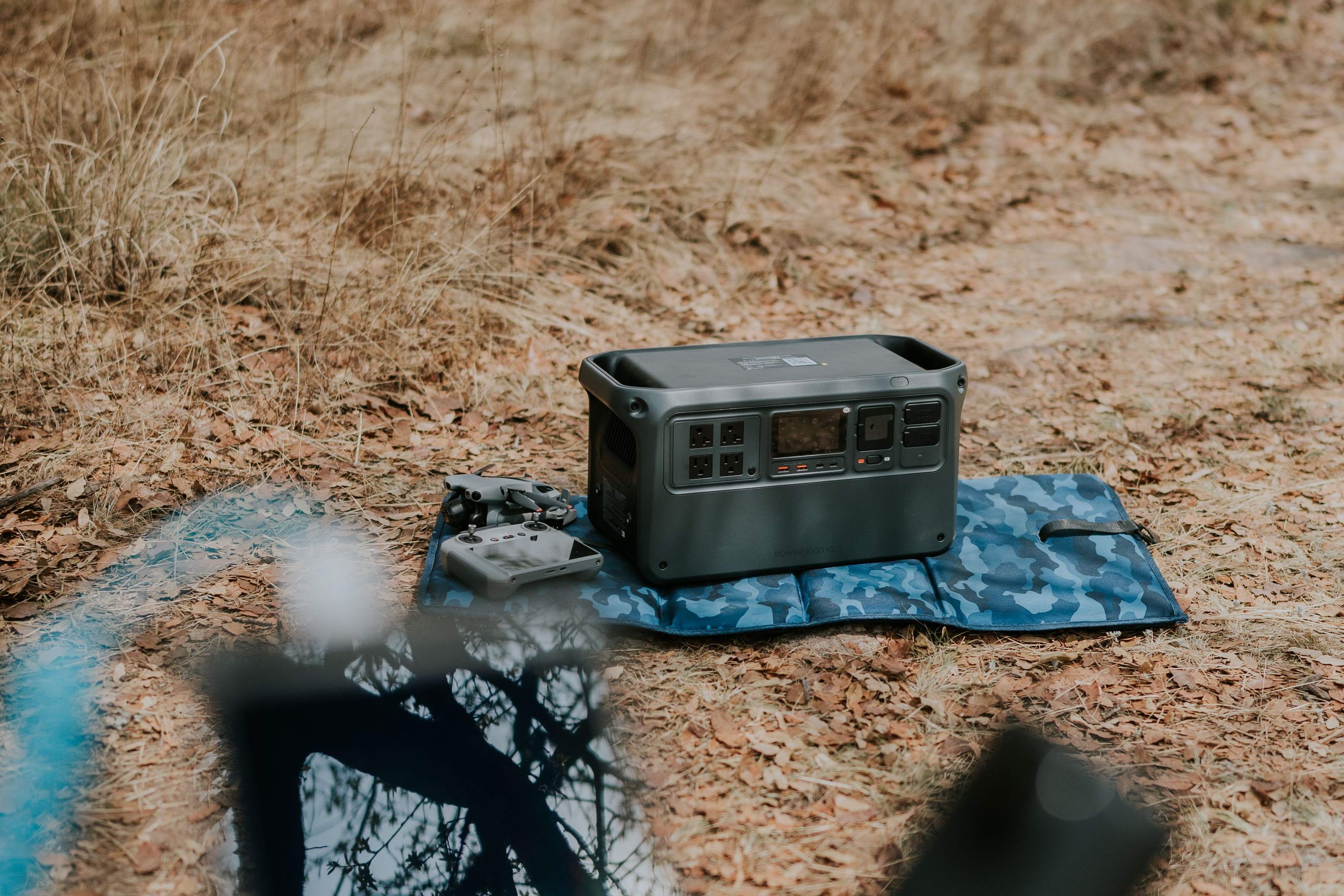
Open the spec sheet on an EcoFlow DELTA Pro 3, an Anker SOLIX F3800, a Jackery Explorer 3000 v2 and a Bluetti AC-series unit side by side and you’ll find the same core ingredient in all four: lithium iron phosphate cells, a pure sine-wave inverter, and a battery management system in a plastic-and-aluminum case. The commodity inside is nearly identical. The price is not — flagship units land anywhere from roughly $0.45 to $0.75 per watt-hour for what is, electrically, close to the same component. That gap isn’t marketing fluff. It comes down to five specific variables, and once you can read them you can score any power station on the market without needing a brand preference at all.
This guide walks through those five variables in order — warranty, chemistry, app and BMS behavior, expandability, and real output — with the actual math behind each, then closes with a verdict by use case rather than by brand. The framework reads the same whether you’re shopping in USD at 120/240V or in EUR at 230V; only the specific SKUs and going rates change by region, and those are broken out further down.
The Head-to-Head, at a Glance
Every brand ships several tiers, so treat this as the shape of each brand’s flagship class, not one SKU’s exact spec sheet — mid-range units in each lineup undercut these figures by 20–40% while keeping roughly the same relative ranking.
| Brand | Current-gen chemistry | Flagship warranty | App / BMS | Expandability | Peak continuous output |
|---|---|---|---|---|---|
| EcoFlow | LiFePO4 (DELTA line) | 5 years | Granular controls, wide accessory ecosystem | Add-on batteries, Smart Generator, Smart Home Panel | ~3,600–4,000W |
| Bluetti | LiFePO4 (AC / Elite line) | 5 years | Solid Bluetooth/Wi-Fi app, fewer granular tweaks | Widest modular battery stacking in the category | ~1,800–5,000W portable (AC-series); wall-mounted EP-series reaches 6,000W+ |
| Jackery | Mixed — NMC on legacy Explorer Pro, LiFePO4 on Explorer v2 / HomePower | 5 yrs current gen, 2–3 legacy | Simplest UI, fewest configurable settings | Limited on portable line; HomePower adds packs | ~3,000–3,600W |
| Anker SOLIX | LiFePO4 | 5 years (6 with registration on some models) | Well-reviewed app, real-time per-outlet monitoring | Expansion batteries, generator input, Home Power panel | Up to 6,000W, true 120/240V split-phase |
Key number
Cycle life, not watt-hours, decides real cost of ownership. A $2,200 NMC-chemistry unit rated for roughly 1,000 cycles costs about $2.20 per full charge cycle before it needs replacing. A $2,600 LiFePO4 unit rated for 3,500 cycles costs about $0.74 per cycle — three times cheaper across its working life despite an 18% higher sticker price.
Chemistry: Why LiFePO4 Isn’t Automatic Just Because You Bought in 2026
LiFePO4 is the default cell chemistry across all four brands’ current flagship lines: 3,000–6,000 rated cycles to 80% capacity versus roughly 800–1,000 for NMC lithium, plus far better thermal stability. But “lithium” on the box doesn’t mean LiFePO4 — older, lighter-weight SKUs still ship with NMC across every brand’s catalog, Jackery’s legacy Explorer Pro line being the clearest current example. NMC survives because it packs more watt-hours per kilogram, so the lightest, most travel-oriented unit in a lineup is exactly where it tends to hide. If shaving a few pounds off a van build matters more than a 10-year cost curve, that’s a legitimate trade — just make it on purpose, by reading the cell-chemistry line itself, not the brand or release year.
Warranty: The Coverage Window Moved, but Not Everywhere
Five years is now the default warranty on a flagship-tier unit from any of these four brands, up from two to three years just a couple of product cycles ago. It is not universal: entry-level and older-generation SKUs often still carry the shorter 2–3-year term, and a few models only unlock the full five years if you register within a set window after purchase, which is easy to miss. Normalize warranty against price with one division — sticker price ÷ warranty years — and a $2,600 five-year unit ($520/yr) beats a $1,800 three-year unit ($600/yr) despite looking pricier at checkout. Then read the warranty card for full replacement versus prorated after year two — that clause matters more than the headline number.
App & BMS: The Setting Nobody Touches That Decides How Long the Battery Lasts
All four apps handle the basics — state of charge, remaining runtime, remote on/off, firmware updates — but differ on what they expose underneath. EcoFlow and Anker’s SOLIX app go deepest: per-outlet load monitoring, scheduled charge/discharge windows, adjustable charge-ceiling and discharge-floor limits. Bluetti covers the same ground with a plainer interface. Jackery deliberately keeps its menu shortest, trading configurability for an app a first-time buyer won’t need a manual for. The setting worth hunting for regardless of brand is the charge ceiling: LiFePO4 held at a full 100% for long stretches ages measurably faster than a pack capped around 90–95% and only topped up before a trip. It costs a few percent of usable capacity and buys real years of pack life — and almost nobody who owns one has ever opened that menu.
Expandability: Portable Box vs. Whole-Home Backbone
Expandability comes in tiers, and confusing them is an expensive mistake. The bottom tier is a sealed unit with no expansion path — what you buy is what you’ll ever have. The next tier accepts add-on battery packs that daisy-chain onto the original inverter, raising capacity without raising output. The top tier adds a smart transfer panel and generator input, turning a portable station into a genuine partial whole-home backup source. Bluetti leads on raw modularity — its B-series packs mix and match across more of its own lineup than any competitor’s add-ons. EcoFlow and Anker SOLIX both reach furthest into whole-home territory, with dedicated smart panels built to sit next to a breaker box. Jackery has historically stopped at tier two, though its newer HomePower line is closing that gap. The rule: buy the expandable version on day one if there’s any real chance you’ll want more capacity later — upgrading a maxed-out unit later means replacing the whole thing, inverter included.
Output: Continuous vs Surge, and the 120/240V Question
Two output numbers matter and marketing blurs them on purpose. Continuous (rated) output is what the inverter can sustain indefinitely — the number that decides whether a mini-split or a well pump runs at all. Surge (peak) output is a short burst, often 1.5–2× the continuous rating, that exists purely to get a motor’s start-up current through before it settles to its running draw. Several brands also ship a resistive-load trick — EcoFlow calls it X-Boost, Bluetti calls it Power Lifting — that never pushes output above the inverter’s continuous rating; it lowers output voltage so a higher-nameplate resistive load like a hair dryer or kettle still draws within that same rating. It only helps resistive loads, not motors, and it stretches a fixed inverter’s nameplate headroom rather than a spec you should size a real load against.
In the US
True 120/240V split-phase output — the spec that lets one unit run a well pump, an electric dryer, or a partial panel backup without a separate transfer kit — used to be reserved for the most expensive SKU in each catalog. That’s loosening: Anker’s SOLIX F3800 now delivers split-phase from a single unit at 6,000W, and EcoFlow’s top DELTA-class units do the same. Most mid-tier and budget units from all four brands are still 120V-only, so check this line item specifically rather than assuming a big watt-hour number implies split-phase capability.
In Europe
The whole 120/240V split-phase conversation doesn’t apply — European homes run 230V single-phase (some rural and larger properties run three-phase), so every brand sells a distinct European-market SKU built to that standard with CE and RCD compliance rather than a US unit with a plug adapter. Don’t import a US-spec unit expecting it to just work on a European supply. European list prices also commonly run higher in EUR than the raw USD-to-EUR conversion of the US price would suggest, largely down to VAT baked into the sticker rather than a genuinely different product.
Real Price-per-Wh: How to Compute It Yourself
The formula is one division: list price ÷ nameplate watt-hours. The trap is comparing numbers that aren’t actually comparable — a flash-sale price against another brand’s list price, or a solar-bundle price against a battery-only unit. Strip both back to battery-and-inverter-only, at the same pricing status, before you compare.
The other pattern worth knowing: on every brand that sells expansion batteries, the base unit’s price carries the inverter and BMS overhead, so its standalone $/Wh looks worse than the expansion packs that bolt onto it. Here’s the shape of that math, using round, representative flagship-tier numbers:
| Capacity added | Approx. price | $/Wh for that increment | |
|---|---|---|---|
| Base unit (inverter + BMS + first battery) | ~4,000Wh | ~$2,600 | ~$0.65/Wh |
| + One expansion battery pack | +2,000Wh | ~$900 | ~$0.45/Wh |
| Blended total after expansion | ~6,000Wh | ~$3,500 | ~$0.58/Wh |
USD reference points to show the pattern, not a specific SKU’s live price — check current region pricing below before you budget against these numbers.
Ready to see it with your own loads instead of illustrative ones? The power-station sizing calculator takes your daily watt-hour draw and surge appliances and returns a usable-Wh target and matched tier per brand.
Open the power-station sizing calculator →
Current models, priced for your region
The specific SKUs and going rates below update automatically for US or European pricing — run them against the five-variable framework above rather than against sticker price alone.
The Honest Verdict, by Use Case
- Best true whole-home output from one box: Anker SOLIX — the only flagship delivering 6,000W of genuine 120/240V split-phase without a second unit or extra hardware.
- Best expandability for a system that will grow: Bluetti — the widest range of mix-and-match battery packs in the category, useful if this year’s budget only covers half of next year’s plan.
- Best ecosystem polish for a near-whole-home build: EcoFlow — the broadest catalog of matched accessories, from smart generators to home backup panels, built to work together out of the box.
- Best for a first power station, no spreadsheet required: Jackery — the simplest app, the most recognizable name at big-box retail, and a lineup wide enough to size correctly without deep research.
None of this is really about brand loyalty — it’s about which of the five variables matters most for your specific job. A van-life buyer and a whole-cabin buyer can both be right choosing two different brands off this same list.
Is the most expensive power station always the best one?
No. Past a certain point you’re paying for output and expandability headroom you may never use. A weekend-cabin buyer running lights, a fridge, and a laptop rarely needs a 6,000W split-phase unit; that budget is better spent on a mid-tier LiFePO4 model plus a proper solar input, sized against your actual daily load rather than the biggest number on the shelf.
Which brand has the best warranty?
At flagship tier, five years is now roughly universal across all four brands, so warranty length alone rarely decides it. What actually differs is whether coverage is full replacement or prorated after the second year, and whether you need to register the unit within a set window to unlock the full term — read the warranty card in the box, not the marketing headline on the product page.
Can I mix expansion batteries from a different generation or brand?
Generally no. Expansion packs are built to a specific model’s BMS communication protocol, and mixing generations — let alone brands — risks charge-balancing conflicts the system was never designed to resolve. Buy expansion batteries from the same product line as the base unit, and check compatibility against the current generation before assuming an older pack will still pair.
Do I actually need 120/240V split-phase, or is 120V enough?
Only if you’re running something that’s wired for 240V in the US — a well pump, an electric dryer, a mini-split, or a partial whole-panel backup. Lights, electronics, a fridge, and most kitchen appliances run fine on 120V. Check your specific loads’ nameplates before paying the premium for split-phase capability you won’t use.
Keep reading
- How Big a Power Station Do You Actually Need? Watt-Hours, Surge Watts and Days of Autonomy — settle the size question before the brand question.
- LiFePO4 vs NMC: Which Battery Chemistry Belongs in Your Off-Grid Power Station — the chemistry behind the cycle-life numbers in these spec sheets.
- The Off-Grid Load Audit: The Phantom Load That Drained a $9k Bank Overnight — know your real loads before comparing any spec sheets.