


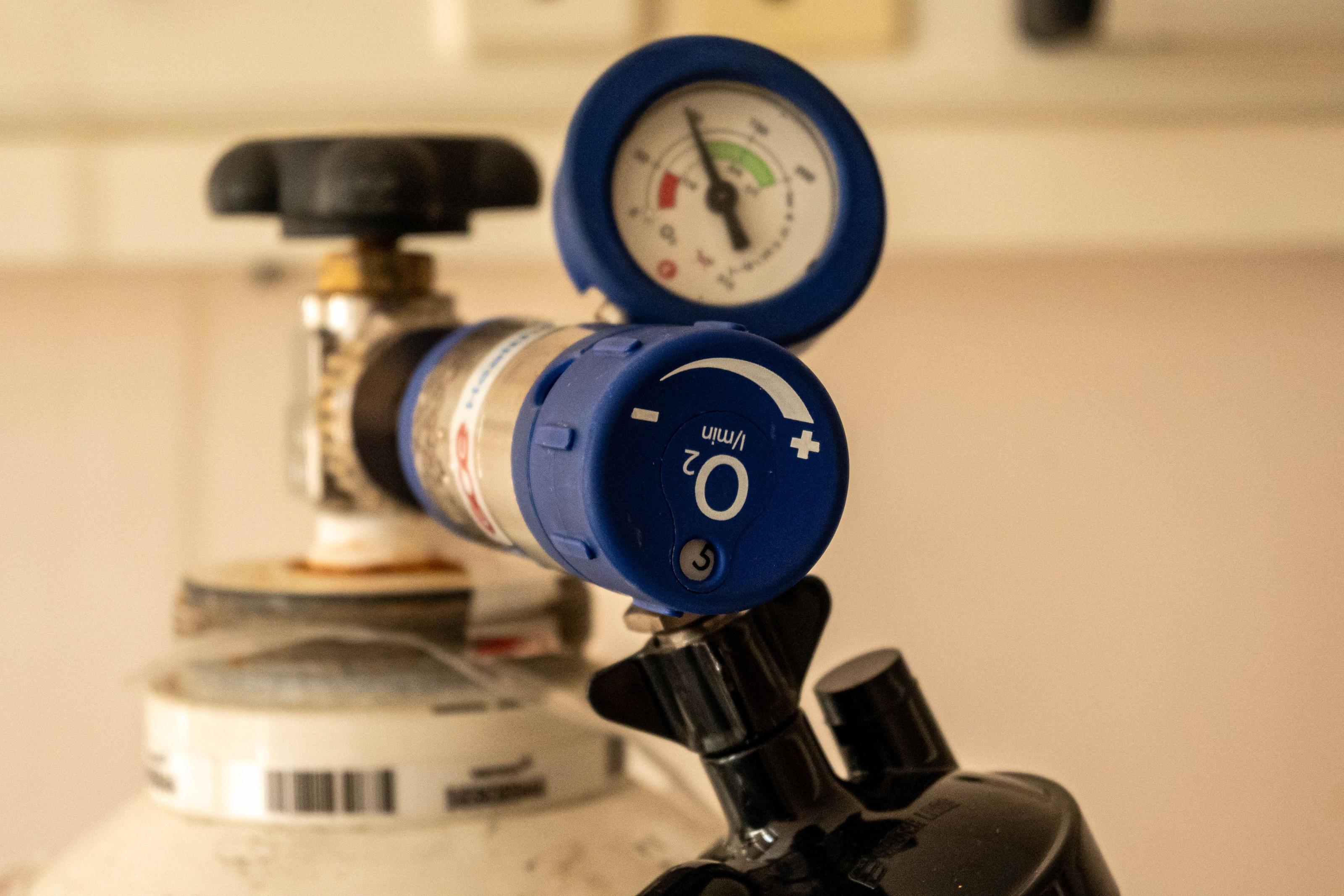
The power goes out at 11:40 PM. In most houses, that's a mildly annoying reset button — blinking clocks, a warm spot forming in the freezer by morning, nothing a flashlight and a decent night's sleep doesn't fix. In a house where someone is asleep on a CPAP, where a fridge shelf holds insulin that has to stay between 36–46°F (2–8°C), or where a sump pump is the only thing standing between a storm and a flooded basement, 11:40 PM is when a very different clock starts — and most backup-power advice was never written with that clock in mind.
Generic guides optimize for comfort: don't lose the wifi, don't let the freezer thaw, don't sit in the dark. This one is written for the smaller, higher-stakes list — households where an outage isn't an inconvenience, it's a medical event with a countdown attached. The sizing math below is almost the same math any backup-power guide would give you. The stakes, and one specific safety decision most guides skip entirely, are not.
You Are Not a Niche Case
It feels like a private, unusual problem — the kind of thing you solve quietly with a marine battery and a bit of hope. It isn't. In the US, the federal government's own emergency-planning data (the HHS emPOWER program, built from Medicare claims) counts more than 3 million beneficiaries who rely on electricity-dependent durable medical equipment — oxygen concentrators, ventilators, apnea monitors, infusion pumps, powered wheelchairs — and over 4.6 million once you add people who depend on regular electricity-fed care such as home dialysis. That's a larger population than several US states combined. Europe doesn't publish one unified figure, but there's no reason the underlying share of any population managing sleep apnea, insulin-dependent diabetes, or home oxygen therapy is meaningfully different on either side of the Atlantic.
No electrical grid, anywhere, was engineered around "this household has a ventilator." That planning gap gets quietly transferred to you, by default, the moment someone in your home depends on a powered device to stay stable. Closing it is a sizing exercise, not a mystery — but it starts with a decision most backup-power guides never even surface.
The Backup Device Can Become the Emergency
Here's the part that changes the whole calculation for this household specifically. In a generic "keep the lights on" guide, the choice between a generator and a battery is mostly about noise, fuel, and money. For a medical-priority household, it's also about which option can hurt you faster than the outage itself would have.
In the US, the Consumer Product Safety Commission tracks an average of about 100 deaths a year from carbon monoxide poisoning tied to portable generators. The commission's own review of fatal incidents from 2012 through 2022 found that 77% happened with the generator running inside the living area of the home — a porch, a basement, an attached garage with the door up — and in 66% of those cases there had been no attempt at ventilation at all. The pattern behind the numbers is almost always the same: the power drops, someone drags a generator into the nearest covered spot at night, in bad weather, in a hurry — exactly the conditions a household managing a CPAP-dependent sleeper or a finite insulin supply is more likely to be in, not less. Panic and a medical clock are a bad combination with a combustion engine.
Key number
CPSC's fatal-incident data (2012–2022) found 77% of portable-generator CO deaths happened with the unit running inside the living area of the home — porch, basement, garage door up — and 66% of those had no ventilation attempt at all. A battery cannot produce carbon monoxide. There's no clearance distance to get right, because there's no combustion to begin with.
None of this makes generators reckless outright — a properly sited, permanently installed standby unit with a factory CO shutoff sensor is a genuinely different, much safer product than a portable unit dragged out mid-storm. It's an argument that when backup power exists specifically to protect someone medically vulnerable, the failure mode of the backup itself belongs in the decision — not just its runtime and its price.
Size the Loads That Actually Matter
Before comparing hardware, get honest numbers for the circuits you'd actually protect. Every load needs two figures, not one: its running watts (what it draws once it's on) and its surge watts (the momentary spike a motor pulls on startup). Sizing for running watts alone is how an inverter trips the instant a pump or compressor kicks on — even with plenty of charge left in the battery.
| Load | Running W | Surge W | Hours/day | kWh/day |
|---|---|---|---|---|
| CPAP + heated humidifier | 60–90W | ~130W | 8 | 0.6 |
| Insulin / medication mini-fridge | 60W | 90W | 10 (cycling) | 0.6 |
| Sump pump | 900W | 2,000–2,700W | ~0.25 (normal day) | 0.2 |
| Wifi, router, phone charging | 35W | — | 24 | 0.8 |
| Lighting (a few rooms) | 100W | — | 5 | 0.5 |
| Total, base critical load | ≈2.7 kWh/day |
That sump-pump row is the one people size wrong most often. Its daily energy use is almost nothing — a few minutes of runtime on a normal day — but its startup surge, a motor fighting a full basin against real water head, can spike 2–3× its running wattage for a second or two. Undersize the inverter's surge rating and the symptom isn't a drained battery, it's the pump refusing to start at the exact moment you need it most.
The One Variable That 10×s Your Number
The table above assumes nothing critical runs around the clock — a fair assumption for a CPAP (used overnight only) and a med-fridge (cycles, doesn't run flat out). Add one load that never turns off, and the math stops being a small adjustment and becomes a different category of problem entirely.
A stationary home oxygen concentrator is the most common example. Continuous-duty draw varies enormously by unit — roughly 150W on an efficient modern 5-liter machine up to 400W on an older one, so check the nameplate rather than guess. Take a representative 350W, run it the honest 24 hours a day a stationary concentrator actually runs, and it alone adds about 8.4 kWh a day — more than triple the rest of the household's entire critical load combined.
Key number
One 13.5 kWh home battery, sized against the base table above, runs about 5 days on stored charge with zero sun. Add a single 24/7 oxygen concentrator to that same battery and autonomy collapses to roughly 29 hours. A continuous load doesn't make your number a bit bigger — it changes which class of backup you need.
If anyone in the house depends on a continuous load like that — a concentrator, a ventilator, home dialysis, an always-charging powered wheelchair — plan from the start for two batteries stacked together, or a fuel-backed generator as the multi-day backstop, rather than the single battery a CPAP-only household could get away with. The gap between those two households isn't 20% more battery. It's a different plan.
Battery or Generator, for This Specific House
For most medical-priority homes, a silent indoor battery should be the default, not the upgrade. The reasons are the same ones that make it a good general backup choice — plus one that matters more here than almost anywhere else.
- Transfer happens in under a second with no combustion — nothing to start, nothing that can fail to start, no engine noise to sleep through an alarm over.
- Zero carbon monoxide as a matter of physics, not a safety feature — there's no clearance distance to get right because there's nothing to ventilate.
- No annual service, no oil, no self-test that can quietly fail in the gap between the one time a year you'd actually need it.
- Paired with solar, it's doing useful work every ordinary day, not sitting idle waiting on the one emergency it was bought for.
A generator still earns a place in this plan — as the backstop for the multi-day, no-sun tail event a battery alone can't outlast, especially for a household carrying a continuous load like a concentrator. If that's your household, make it a permanently installed standby unit, sited and vented by a licensed electrician, with a factory CO shutoff sensor — not a portable unit stored in the garage for exactly the panicked setup the CPSC data warns about.
In the US, that battery is typically a Tesla Powerwall 3 or FranklinWH-class unit on a 120/240V split-phase panel; in Europe, sonnen and BYD hold the equivalent position on a 230V single-phase or three-phase supply. The hardware differs by region — the sizing math above doesn't.
Run your own critical-load list, exactly the way the table above builds it, through the calculator made for it:
Open the Backup Power Sizing Calculator →
See current battery packages sized against a household protecting a CPAP, a medication fridge, and a sump pump:
Wire It So It Actually Works
Sizing the battery is half the job. A sump pump is hardwired into the panel — there's no solving that with an outlet, however large the battery behind it. Getting these loads onto real backup means a licensed electrician wiring a dedicated critical-loads subpanel (or a modern smart panel, which many battery installers now bundle in), so the battery picks up exactly the named circuits automatically the instant the grid drops — instead of you running extension cords in the dark.
Keep the scale of that project straight from a much smaller, much cheaper product: a dedicated CPAP battery pack, the kind DME suppliers sell for $100–$300, is real and useful — it bridges a CPAP alone through a night or two of camping or an outage. It is not a whole-home battery, and it does nothing for a fridge or a sump pump. If you're protecting more than one circuit, you need the panel-level system above, not a device accessory, however good that accessory is at its one job.
One more step costs nothing and is worth doing regardless of which hardware you choose: ask your utility about a medical-priority list. In the US, most utilities keep a "medical baseline" or "critical care" register that typically speeds restoration priority and provides advance notice of planned outages. In the UK, it's the statutory Priority Services Register; most European countries require electricity distributors to maintain an equivalent vulnerable-customer list under national rules, though the name and specifics vary — ask your supplier what theirs is called. None of these guarantee the power never drops. All of them are free, and all of them make you the household that gets called first.
Common Questions
How long will a home battery actually run my CPAP if the power goes out?
A CPAP alone is a tiny load — about 0.6 kWh a night even with a heated humidifier. A single home battery curated to just that circuit would run it for weeks. In practice, the real limit on runtime is whatever else shares that battery — a fridge, a sump pump, lighting — not the CPAP itself.
Is it safe to run a portable generator in the garage with the door open?
No. CPSC's fatal-incident data specifically flags this setup — generator in an attached garage, door cracked or fully open — as one of the most common configurations behind CO deaths. Carbon monoxide doesn't need a sealed room to reach lethal concentrations; it needs proximity and the wrong wind direction. Portable generators belong at least 20 feet from any window, door or vent, pointed away from the house.
Do I need a whole-home battery, or is a small CPAP battery pack enough?
Depends what else you're protecting. A $100–$300 dedicated CPAP battery bridges the CPAP alone for a night or two and does nothing for a fridge, sump pump or lighting circuit. If you have more than one critical load in the house, you need a panel-level battery system, not a device accessory.
Should I register my medical equipment with my utility company?
Yes, and it's free in almost every case. Ask about a "medical baseline" or "critical care" list in the US, the Priority Services Register in the UK, or your national vulnerable-customer register in Europe. It typically speeds restoration priority and gets you advance notice of planned outages — it isn't a guarantee the power never drops, which is exactly why it pairs with, rather than replaces, your own backup power.