


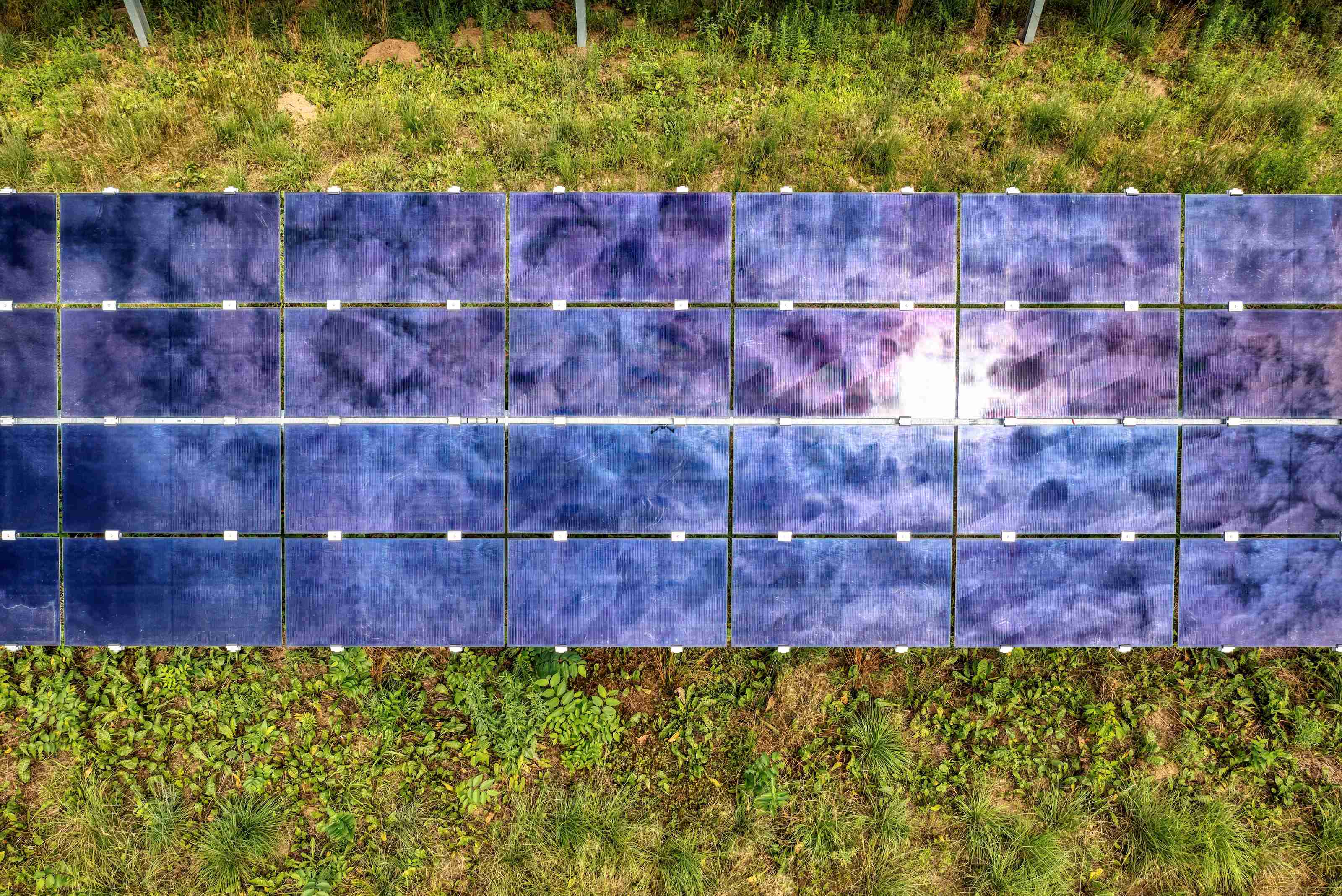
The short answer
A panel’s wattage is a lab number measured at 25°C cells and dead-on sun; stack real heat (cells run 30–40°C over air, costing 12–18%), a 25° off-angle (~9%), light soiling and cable losses, and a 200W panel sustains about 141W on a good clear day — plan on 65–75% of rated.
Foldables win if someone actually re-aims them through the day; rigid glass holds its transmission for decades and can go bifacial for another 5–20% on a ground mount.
Before adding any panel, check the station’s voltage, amp and watt ceilings against the panel’s cold-morning Voc, and confirm the connector — MC4, XT60 or a brand’s proprietary plug — actually mates.
Unfold a panel labeled “200W” on a cloudless afternoon and watch the power station’s screen settle on a number that is very rarely 200.
Most people watch 130–150W climb the display, assume the panel is faulty, and lose an afternoon to a support call that ends with “that’s normal.” It is normal — the watt rating on a solar panel is a laboratory result, measured under conditions a panel almost never sees strapped to a truck bed or bolted to a cabin roof.
Once you know what that number actually promises, and what stacks against it before your battery sees a watt, buying and wiring panels for a power station stops being guesswork.
This is the physics and the wiring, not the brand war: how much of the rated wattage you actually get, foldable vs rigid trade-offs, how to read your station’s solar-input spec so you don’t buy a panel it can’t use, and which connector standard decides whether that panel plugs in at all.
The Number on the Panel Is a Lab Result, Not a Promise
Every panel’s wattage rating is measured under Standard Test Conditions (STC): 1,000W/m² of irradiance (roughly the strongest sun gets at sea level, straight overhead, on a clear day), a cell temperature held at exactly 25°C, a defined light spectrum (AM1.5), and the panel aimed dead-on, perpendicular to the light.
That’s not a real afternoon — it’s a flash-tester in a lab, controlled that precisely so the number is reproducible, not because it forecasts what you’ll see in a field.
The cell-temperature part is the one nobody warns you about, and it runs backwards from what most people assume: hotter sun means less power, not more. Dark cells absorb heat efficiently; after fifteen or twenty minutes in direct sun they commonly run 30–40°C hotter than the air around them — a panel on a 30°C day can have cells at 60–65°C.
Every panel carries a power temperature coefficient, typically -0.35% to -0.45% per °C above the 25°C reference.
Run that on a genuinely hot, sunny day and you’re already down 12–18% before angle, dust or cabling enter the picture — on the best-looking charging day of the year.
Free calculator
Power Station Sizing Calculator
Devices and days in — usable Wh, surge watts, recharge wattage and a matched size tier. Live, free, no sign-up — and the result becomes a brief you can buy against.
Stack the Real Losses and Here’s What You Actually Get
Heat is only the first cut. Three more factors stack on top of it, multiplicatively, every time you charge:
- Angle (cosine loss): output scales with the cosine of the angle between the panel face and the sun — a panel sitting 25° off perpendicular (typical for a kickstand propped once and left for a couple of hours) loses about 9% right there; laid flat with the sun low in the sky, that loss climbs past 30%.
- Soiling: dust, pollen and light grime cut transmission by roughly 3–8% under normal conditions, more after a dry spell or near a gravel road.
- Cable and connector resistance: a reasonable-gauge cable with clean, tight connections loses about 2–4%; a thin, long or corroded run can double that.
Stack a hot, slightly-off-angle, lightly dusty real day — the kind you actually charge on, not the one on the box — and here’s what a 200W-rated panel nets:
Key number
200W rated × 0.84 (heat, cell at ~65°C) × 0.91 (25° off perpendicular) × 0.95 (light soiling) × 0.97 (cable/connectors) ≈ 141W sustained — about 70% of rated, on a good clear day, before a single cloud crosses the sky. Overcast conditions cut irradiance itself, sometimes to 10–30% of the 1,000W/m² reference — a separate, bigger hit than everything above combined.
None of this means the panel is defective or the spec sheet lied — it means the number on the box is a ceiling, not a forecast. Size a system expecting roughly 65–75% of rated wattage on a good day, and the number on your power station’s screen stops being a source of anxiety.
Foldable vs Rigid: What You’re Actually Trading
Both formats put the same basic ingredient — monocrystalline silicon cells — behind a different face, and the face is most of the trade-off.
Foldable panels wrap cells in a flexible laminate — usually ETFE or the cheaper PET — inside a zippered fabric case with a kickstand, built to fold to briefcase size for a trunk or backpack.
ETFE holds up better over time: higher light transmission (roughly 94–97% versus 88–92% for PET) and better UV/scratch resistance, without the visible yellowing budget PET panels often show after a couple of summers.
That aging curve is real and rarely mentioned in month-one reviews — a PET-laminated panel that tests fine on day one can be measurably down by year two or three, stacked on top of everything above.
Rigid panels put the same cells behind tempered glass in an aluminum frame — heavier, nothing you fold into a bag, but glass holds its light transmission and scratch resistance for decades in a way no laminate does, and framing tends to pack cells slightly more efficiently since nothing has to survive being creased.
Ground-mounted rigid panels can also go bifacial, picking up an extra 5–20% from light reflecting off the ground behind them — a trick with no equivalent on a roof mount or a folded fabric case.
The trade most buying guides skip: a foldable’s real advantage is that a person can walk over and re-tilt it every hour, clawing back the cosine loss a fixed panel eats all day. A rigid panel bolted at one compromise angle can lose more to the sun’s daily arc than it gains from slightly better cell packing — which format wins depends less on the datasheet than on whether anyone will actually walk outside and re-aim it.
| Foldable | Rigid | |
|---|---|---|
| Face material | ETFE or PET laminate over cells | Tempered glass |
| Typical wattage range | 60–400W | 100W up to multi-kW arrays |
| Weight per rated watt | Lower — built to carry | Higher — built to stay put |
| Best mount | Ground, propped, moved through the day | Roof rack, ground mount, fixed structure |
| Can be re-angled through the day | Yes — that’s the point | Rarely, once installed |
| Long-term weathering | Laminate can yellow or haze over years (worse on PET) | Glass holds transmission for decades |
| Bifacial option | No | Yes, ground-mount only |
Matching a Panel to Your Station’s MPPT Window

Every power station’s solar input is governed by an MPPT (maximum power point tracking) controller with three ceilings that matter independently: maximum input voltage, maximum input current (amps), and maximum input wattage. Exceed voltage and the controller can shut down or take damage; stay under voltage but exceed the wattage ceiling and it simply clamps — whatever a second panel produces above that line goes nowhere.
Two panel numbers matter here. Vmp (voltage at max power) is what it runs at under load. Voc (open-circuit voltage) is what it reads with nothing connected — always higher than Vmp, and it climbs further on cold mornings, since panel voltage moves opposite power as temperature drops.
A panel rated 22V Voc at 25°C can read 25–26V on a frosty dawn, and it’s Voc — the cold-morning worst case — a controller’s voltage ceiling has to clear, not the everyday Vmp on the datasheet.
Wiring two panels in series adds their voltages at the same current; parallel adds their currents at the same voltage.
Which to use depends on where your setup sits relative to the station’s window: if one panel’s Voc leaves headroom under the ceiling, series often lands you in the upper-middle of the MPPT’s range — typically where it tracks most efficiently — while adding wattage free within the amp limit.
If a single panel is already close to the ceiling, parallel is the only safe way to add a second one.
Solar-input ceilings vary by station class and shift every product cycle — treat the table below as the shape of the market, not your unit’s spec:
| Station class | Typical voltage window | Typical max input |
|---|---|---|
| Compact (under ~800Wh) | ~11–30V | 100–300W |
| Mid-tier (~800–2,000Wh) | ~11–60V | 400–800W |
| Flagship / expandable | ~12–150V, some dual-MPPT | 1,000–1,600W+ |
Representative ranges, not a specific model’s live spec — confirm your unit’s actual voltage, amp and watt ceilings before adding a panel.
The expensive version of this mistake: buying a second identical panel to “double the watts” without checking the station’s max input watts, then finding the app shows the same ceiling as before. Nothing is broken — the controller is doing exactly what its wattage limit says. Check voltage, then amps, then watts, before a second panel goes on the cart.
Already know your daily load? The power-station sizing calculator turns it into a target usable-Wh number and a matched panel wattage instead of a guess.
Open the power-station sizing calculator →
Notice what hasn’t come up once in this whole section: 120V or 230V. Everything between a panel and a station’s charge controller is DC — the AC voltage split that governs almost everything else in an off-grid build (see the Europe 230V guide) simply doesn’t apply here.
A panel bought in Rotterdam and one bought in Reno are electrically identical; the only things that differ by region are the connector on the end and where you buy it.
MC4, XT60, or a Brand’s Own Plug: The Connector That Decides If It Fits
MC4 is the closest thing solar has to a universal standard — a locking, weatherproof connector (rated IP67) that started on rooftop grid-tie systems and now ships on almost every rigid panel and most higher-wattage foldables. Being an open standard, an MC4 panel from any brand physically mates with any MPPT input built to accept MC4 — the connector itself is rarely the bottleneck; the voltage/amp/watt math above still is.
The catch: several power-station brands sell their own foldable panels with a proprietary connector — often a locking DC barrel, sometimes an 8mm plug — that only mates with that brand’s own port.
Buy a cheaper third-party MC4 panel to save money and it simply won’t plug in without an adapter cable.
XT60 is a third standard worth recognizing on sight: a compact bullet connector common in the DIY 12V, marine and RV world, low resistance in a small footprint, distinct from both MC4 and any brand’s proprietary barrel.
This is also where the real recurring cost lives, and it isn’t a marketing invention: an adapter or extension cable sits outdoors, in full sun and flexing weather, for its whole working life.
Cheap, non-UV-rated jacket cracks and the copper inside corrodes within a season or two — a corroded connector is exactly the resistance loss covered above, quietly eating another few percent before anyone notices.
Buy outdoor-rated (UV-stabilized) cable and budget it as a wear item, not a one-time accessory.

Before adding a panel to a station you own, run it in order: (1) read the station’s voltage window, max amps and max watts; (2) check the panel’s Voc — the cold-morning worst case, not Vmp — against that ceiling; (3) pick series or parallel based on remaining voltage headroom; (4) confirm the connector — MC4, XT60 or proprietary — matches, or budget the adapter cable as part of the purchase.
Panels, and the outdoor-rated adapter or extension cable to actually connect them, priced for your region:
Why does my “200W” panel only show 130–150W on the app?
That’s the expected range, not a fault. Cell heat alone typically costs 12–18% on a hot day, and angle, soiling and cable losses stack on top — a well-set-up panel commonly nets 65–75% of rated wattage. See the worked example above.
Should I buy a foldable or a rigid panel for my power station?
Foldable if you’ll carry and re-aim it through the day — camping, van life, storm-prep grab-and-go. Rigid if it’s going on a roof rack, shed or fixed ground mount and staying there — better long-term weathering and cell packing, at the cost of never being casually re-angled.
Can I wire two different panels, or two different wattages, together?
Only carefully. Mismatched panels in series run at the weaker panel’s current; in parallel, at the weaker panel’s voltage — either way you lose some of the stronger panel’s output, and most manufacturers don’t recommend mixing models. Matching panels — same model, same age — is the safe default.
What’s the difference between an MC4 plug and the connector that came with my power station?
MC4 is an open industry standard that fits any compatible MPPT input, regardless of brand. Many power-station brands ship their own foldable panels with a proprietary barrel connector that only mates with their own port — mixing the two needs an adapter cable, worth budgeting for rather than discovering at unboxing.
Keep reading
- How Big a Power Station Do You Actually Need? Watt-Hours, Surge Watts and Days of Autonomy — size the station itself before you size the panels feeding it.
- EcoFlow vs Bluetti vs Jackery vs Anker: The Off-Grid Power-Station Comparison (2026) — how the big four compare once you know your input watts.
- How Many Solar Panels to Run a Whole House Off-Grid? Real Numbers by Home Size — the panel math for a full rooftop array instead.